

Overview of China's Urban Infrastructure Lifeline Policies
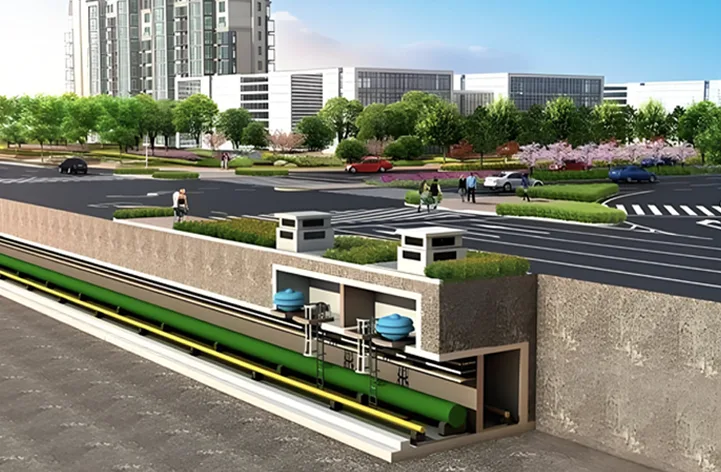
Urban lifelines — gas, water supply, drainage, transportation, communications, power, and bridges — are the engineering systems that keep a city running, and their safe operation matters to every resident and business. Smart sensors, wireless communication, and data analytics create new options for monitoring these systems, and China has made the Urban Infrastructure Lifeline Safety Project a national program. According to the Ministry of Housing and Urban-Rural Development, lifeline safety projects in 19 cities, including Beijing and Shenzhen, are already operational, with projects in 21 more cities, including Shanghai and Changchun, under implementation. This article reviews the key national and local policy documents behind the program.
National-level policies
January 2018 — The General Offices of the CPC Central Committee and the State Council issued the "Opinions on Promoting the Safe Development of Cities," calling for urban lifeline projects and the application of safety technologies in risk prevention, monitoring, early warning, and emergency response.
November 2019 — The Office of the State Council Safety Committee issued the "National Safe Development Model City Evaluation Guidelines (2019 Edition)," requiring the integration of urban planning with disaster prevention and mitigation plans, with expert review and mid-term evaluation.
September 2021 — The Office of the State Council Safety Committee issued the "Guidelines for the Construction of Urban Safety Risk Comprehensive Monitoring and Early Warning Platforms (Trial)" (An Wei Ban Han [2021] No. 45), drawing on the experience of Shanghai, Nanjing, and Shenzhen to define platform construction content and supporting mechanisms.
October 2022 — The State Council Safety Production Committee and the National Flood Control and Drought Relief Headquarters issued a notice on "Strengthening Urban Safety Work," urging regions to prevent and resolve major safety risks.
May 2023 — MOHURD Minister Ni Hong announced the full launch of the Urban Infrastructure Lifeline Safety Project, including a comprehensive infrastructure survey, a database covering aboveground and underground facilities, and an urban safety risk list.
Local-level policies
Beijing, September 2019 — The Municipal People's Government Office issued "Implementation Opinions on Promoting Urban Safety Development" (Jing Zheng Ban Fa [2019] No. 17), calling for enhanced safety monitoring of gas, electricity, heating, water, drainage, telecommunications, and transportation.
Shanghai, April 2021 — The Municipal People's Government issued "Opinions on Further Strengthening Urban Safety Risk Prevention and Control" (Hu Fu Fa [2021] No. 3), requiring lifecycle maintenance of lifeline infrastructure and integrated infrastructure databases.
Zhejiang, May 2021 — The Provincial Development and Reform Commission and Department of Ecology and Environment issued the "14th Five-Year Plan for Zhejiang Province to Respond to Climate Change" (Zhe Fa Gai Gui Hua [2021] No. 215), requiring improved lifeline construction and operational standards under extreme weather.
Shenzhen, May 2022 — The Municipal People's Government issued the "Urban Lifeline Engineering Safety Construction Work Plan," targeting comprehensive perception, access, monitoring, and early warning under unified standards.
Jiangsu, May 2022 — The provincial lifeline safety leadership group promoted "smart monitoring" across seven risk scenarios, with attention to data integration and desensitization.
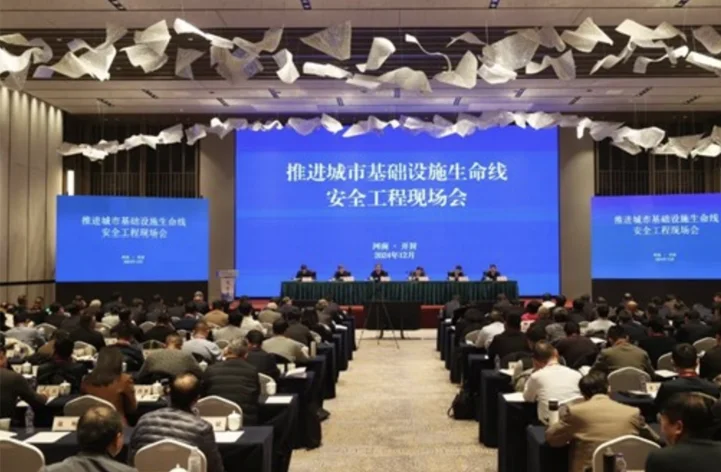
Zhejiang, June 2023 — A provincial site meeting in Keqiao shared experience in using digital methods for early detection and control of risk hazards.
Henan, 2023 — The province issued its "Three-Year Action Plan for the Construction of Urban Infrastructure Lifeline Safety Engineering (2023–2025)."
For Hitelecom, these policies define the monitoring scenarios — gas pipelines, bridges, water networks, and manhole covers — that the company's sensor terminals and cloud platform are designed to serve.
This article is an edited overview based on publicly released policy documents; official English titles of the cited documents may differ from the renderings above. Please refer to the original releases for authoritative content. Source: compiled from public releases of the State Council Safety Production Committee, the Ministry of Housing and Urban-Rural Development, and provincial and municipal governments (2018–2023). Edited summary by Hitelecom.