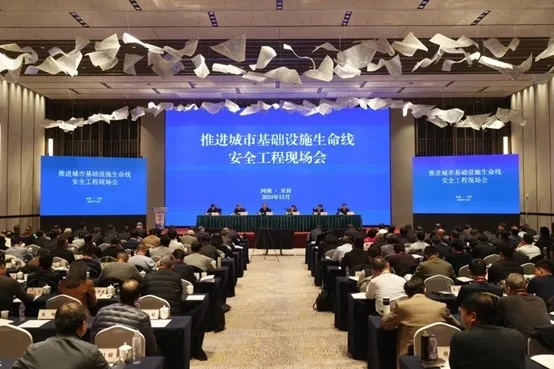


On December 20, the Ministry of Housing and Urban-Rural Development held a meeting in Kaifeng, Henan Province, to advance urban infrastructure lifeline safety projects. The meeting thoroughly implemented the spirits of the 20th National Congress of the Communist Party of China and the second and third plenary sessions of its 20th Central Committee. It aimed to review progress and achievements in urban lifeline safety project construction, share experiences and practices from various regions, and further mobilize, redeploy, and promote these projects. The goal is to significantly enhance urban safety and resilience, thereby facilitating high-quality urban development through elevated safety standards.

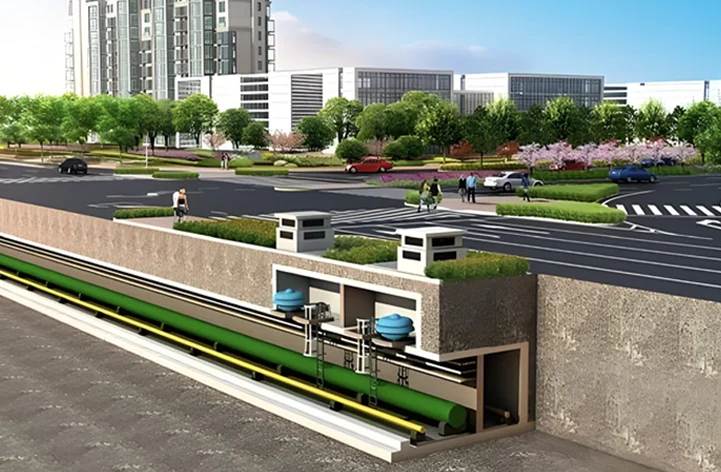
The meeting highlighted that since last year, regions have swiftly initiated comprehensive construction projects for urban lifelines, including gas, bridges, tunnels, water supply, drainage, and integrated utility tunnels. This effort has led to significant achievements, clearer understanding of urban infrastructure, and gradual expansion of IoT sensing devices across key sectors. To date, over half of the cities at the prefectural level and above have established regulatory platforms, covering critical areas such as gas, bridges, and water services. These platforms enable comprehensive perception, automatic collection, monitoring, analysis, and early warning of operational data for urban lifelines, effectively preventing and mitigating numerous risks.
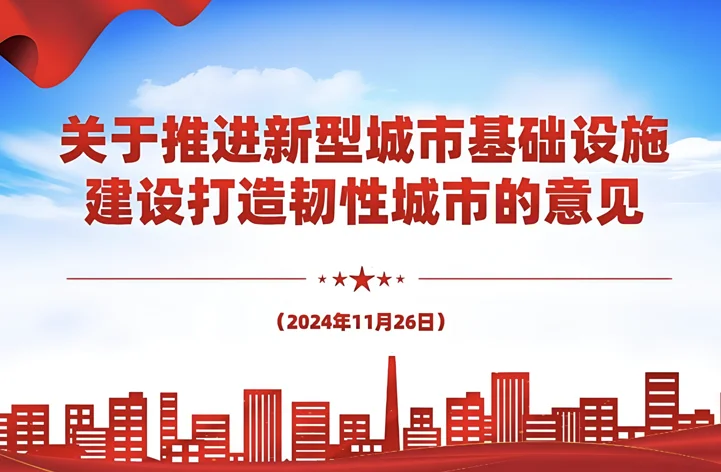
The meeting emphasized the high importance the Central Committee of the Communist Party and the State Council place on urban safety. The General Offices of the CPC Central Committee and the State Council issued "Opinions on Promoting the Construction of New Urban Infrastructure to Build Resilient Cities," setting clear requirements for accelerating urban lifeline projects. Localities are urged to fully recognize the significance of these projects, diligently implement the decisions and deployments of the CPC Central Committee and the State Council, and intensify efforts to achieve new progress in urban lifeline construction with higher standards, greater determination, and stronger measures.
Key points include:
1. Adopting a systematic approach, focusing on priorities and urgent needs, integrating lifeline projects with urban renewal and renovation of old residential areas for coordinated planning and advancement.
2. Enhancing the deep integration of artificial intelligence, the internet, big data, and other modern information technologies with the construction of urban infrastructure to improve the quality and efficiency of urban safety operation monitoring.
3. Embracing a "full lifecycle management" mindset, reinforcing the primary responsibilities of relevant departments and enterprises, refining closed-loop handling processes and methods to effectively enhance the capability of managing and resolving safety risks.
National Policy
Vigorously promote the construction of urban lifeline projects
From 2021 to 2024, the Chinese government issued several policy documents, highlighting the central role of urban lifelines in ensuring urban development. As cities evolve into hubs of economic activity and showcases of human civilization, the infrastructure lifelines become the solid support for this prosperity and order. Strengthening the construction of urban lifeline safety projects is urgent.
Report of the 20th National Congress of the Communist Party of China, 2022
Implement urban renewal actions, strengthen urban infrastructure construction, and create livable, resilient, and smart cities. Establish a comprehensive safety and emergency framework, improve the public safety system, and promote the transformation of public safety governance models towards proactive prevention.
Guiding Opinions on Promoting Urban Infrastructure Lifeline Safety Projects, 2023
Carry out surveys of urban municipal infrastructure, focusing on underground facilities, including related surface facilities, based on local conditions. On this basis, establish and improve a comprehensive management information platform for urban municipal infrastructure, identify and rectify safety hazards, and perfect the risk prevention and control mechanism.
Guidelines for the Construction of Urban Safety Risk Monitoring and Early Warning Platforms (2023 Edition), 2023
Further focus on major urban safety risks, clarify the functional positioning of the comprehensive platform and safety risk monitoring and early warning systems in various industries, promote cross-departmental information sharing and business collaboration, and build a coordinated and integrated urban safety risk monitoring and early warning system to effectively enhance urban safety risk prevention capabilities.
Implementation Plan for Promoting the Update of Buildings and Municipal Infrastructure Equipment, 2024
Promote the addition and update of intelligent sensing equipment for underground pipelines, bridges, tunnels, and manhole covers, along with the construction of a monitoring IoT, transforming urban safety risk control from passive response to active prevention and promoting the deep integration of modern information technology with urban lifeline projects.
Opinions on Promoting the Construction of New Urban Infrastructure to Build Resilient Cities, 2024
Accelerate the construction of urban infrastructure lifeline projects, gradually achieve real-time monitoring, simulation, scenario construction, rapid assessment, and big data analysis of the operational status of municipal infrastructure, improve timely warning of safety hazards and emergency response capabilities, and ensure the safe operation of municipal infrastructure.
Source: Ministry of Housing and Urban-Rural Development Website