



Wireless soil sensors.
Understand the root zone.
Plan the next action.
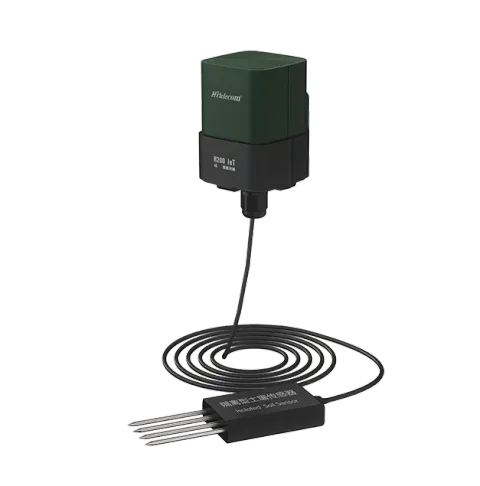
Hitelecom H Series wireless soil sensors bring soil moisture, EC, pH and NPK readings from selected monitoring points into your project. Soil temperature can be included where confirmed in the selected configuration. Match the sensing channels, probe arrangement and medium to your crop, planting or maintenance objective, then choose a 4G, NB-IoT or LoRa variant and reporting profile. Product form and probe options can be customized, with data delivered to Hitelecom Cloud or an agreed receiving platform.
KEY FEATURES
Know your soil.
Connect the next decision.
Bring the selected soil measurements, installation depth and data destination into one monitoring plan.
Root-zone moisture
Follow wetting and drying at defined soil points to support irrigation and planting care.
EC & pH trends
Add conductivity and acidity context using the selected channels and a verified soil-monitoring method.
NPK configuration
Include nutrient channels where required and relate their readings to the project's soil-testing programme.
Custom sensing options
Specify channel combinations, probe arrangement and product form for your soil or growing medium.
IP68 enclosure
The published family lists IP68 protection and probe configurations designed for long-term soil deployment.
Wireless deployment
Choose 4G, NB-IoT or LoRa around regional coverage and the agreed data path.
NFC & OTA
Use supported NFC setup and remote firmware updates within the supplied configuration.
Project-specific alerts
Set notifications around site baselines, planting needs and the team's agreed review workflow.
SENSE WHAT YOUR SOIL PROJECT NEEDS
Choose the soil channels.
Define the monitoring points.
Useful soil data starts with the soil or growing medium, the planting objective and a defined sensing position. Select the channels that answer your management question, then agree their measurement basis and site-verification method.
Root-zone moisture
Observe wetting after irrigation or rainfall and drying between events. Interpret the local trend with the soil profile, root-zone depth and crop or planting needs.
- Define your measurement
- Soil texture · Root-zone depth · Irrigation method · Representative locations
Soil EC & pH
Record conductivity and acidity changes at selected soil points. Specify the required range and measurement method, and compare the trends with appropriate site soil tests.
- Define your measurement
- Required EC range · pH objective · Soil test results · Verification method
NPK & custom sensing
Select nutrient channels and additional sensing around the project brief. Soil temperature is included where confirmed for the selected configuration; probe and product-form options can be customized.
- Define your measurement
- Channel list · Nutrient method · Growing medium · Probe arrangement · Product form
Measure the soil at a defined point.
Keep the installation practical.
Plan locations around representative soil, planting type, irrigation zones and the effective root area. Agree depths and probe contact for the selected medium, and use separate identified points where comparisons are needed. Protect the sensing elements and cables from field operations. Confirm the communication terminal's mounting and network coverage, with access for inspection and project verification.
FROM SOIL READING TO SITE ACTION
See the soil trend.
Give the team a useful next step.
A sampling interval defines when measurements are taken; a reporting interval defines when data is sent. Choose these separately around the expected soil changes, irrigation events and operational workflow. Reporting intervals can be configured for the project. Verify the required data and notification timing during commissioning.
Measure
The selected channels record conditions at a defined soil point. Agree the sensing depth, medium, sampling interval and reference checks before deployment.
Transmit
Readings follow the selected 4G, NB-IoT or LoRa path. Confirm local coverage, the reporting profile and delivery to the receiving platform.
Review
Compare soil trends with rainfall, irrigation and maintenance records. Set project thresholds and agree who reviews a notification or visits the site.
The published H Series reference is more than 10 years of battery life at a four-hour reporting interval under specified test conditions. Review the estimate for the selected sensing configuration and actual deployment. Measurement demand, sampling duty, network coverage, retransmissions, operating temperature and reporting frequency affect runtime. Agree the power arrangement and monitoring profile with the ordered specification.
APPLICATIONS
Soil monitoring applications.
41 ways to understand the soil.
Explore 41 defined soil-monitoring tasks across eight application groups, from crops and growing media to parks, ancient and veteran trees, roadside planting, rain gardens, restoration and research. Each scene identifies the soil trend, monitoring position and project information needed to choose a useful configuration.
8 application categories 41 monitoring tasks
Illustrative application scenes. Each soil point, probe configuration and growing medium is selected and verified for the project's planting or maintenance objective.
01Field crops & irrigation5 monitoring tasks +
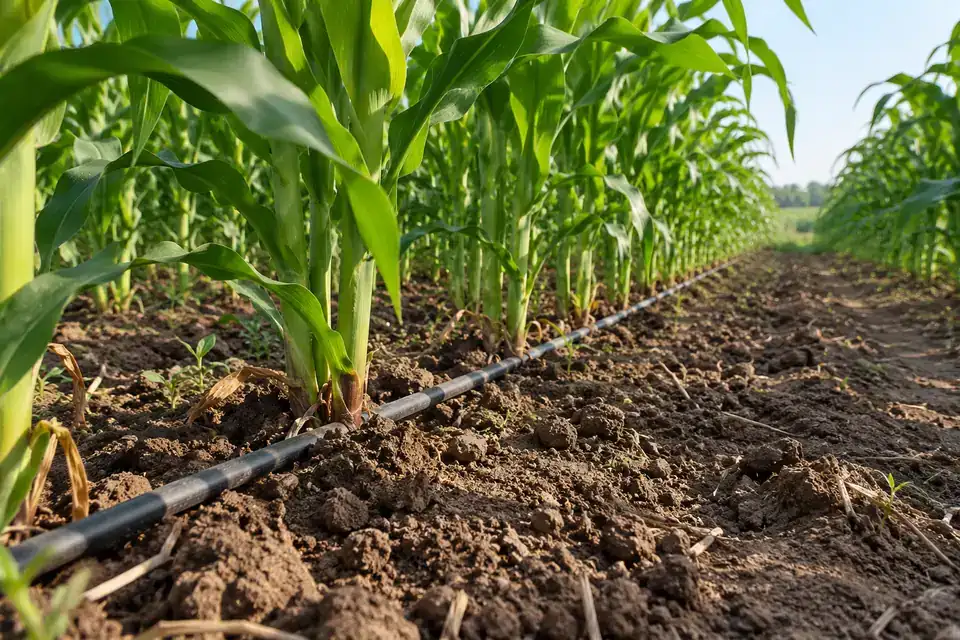
Follow root-zone wetting and drying across cultivated fields. Match monitoring points to crop rows, soil layers and irrigation blocks, recording the growing stage and field operations.
Row-crop irrigation blocks
Wetting response and drying between irrigation events at a defined crop-row position.
Follow root-zone moisture through the irrigation cycle in maize, soybean or other row crops. Position representative points within each management block, then compare wetting and drying with irrigation records and crop stage. Where soil texture or elevation changes, give those zones their own reference rather than blending them into one average. The resulting time series supports a practical review of watering timing and field visits.
- Measurements to observe
- Wetting response and drying between irrigation events at a defined crop-row position.
- Monitoring point
- Representative rows within each soil and irrigation block, at depths selected for the crop stage.
- Placement & installation
- Maintain soil contact and route cables clear of cultivation and harvest paths. Position the wireless terminal for reception and maintenance access.
- Project details
- Crop, soil texture, irrigation layout, root-zone depths, field operations and required reporting.
Open-field vegetable beds
Root-zone drying and recovery after irrigation in each representative vegetable-bed zone.
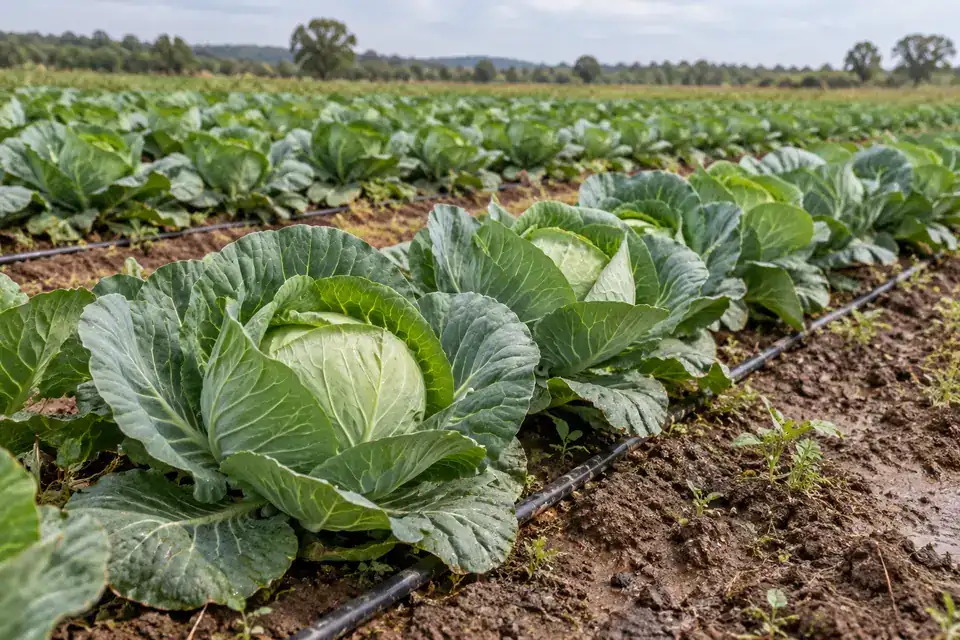
Use local soil readings to compare watering response across vegetable beds with different crop stages or irrigation valves. Record the crop and planting date alongside the readings so the team can interpret demand through establishment, growth and harvest. Representative moisture points can guide where to inspect after a dry period or irrigation change. Include EC and pH where the specified method and range suit the soil-management programme.
- Measurements to observe
- Root-zone drying and recovery after irrigation in each representative vegetable-bed zone.
- Monitoring point
- Active beds within comparable soil and planting groups, with drip-line position and root-zone depth documented.
- Placement & installation
- Choose a stable position outside cultivation routes. Protect the cable during bed preparation and document reinstallation when the crop changes.
- Project details
- Crop rotation, bed layout, irrigation valve groups, chosen channels, depths and soil-test references.
Potato ridges & root crops
Moisture response within the planted ridge through irrigation and drying periods.
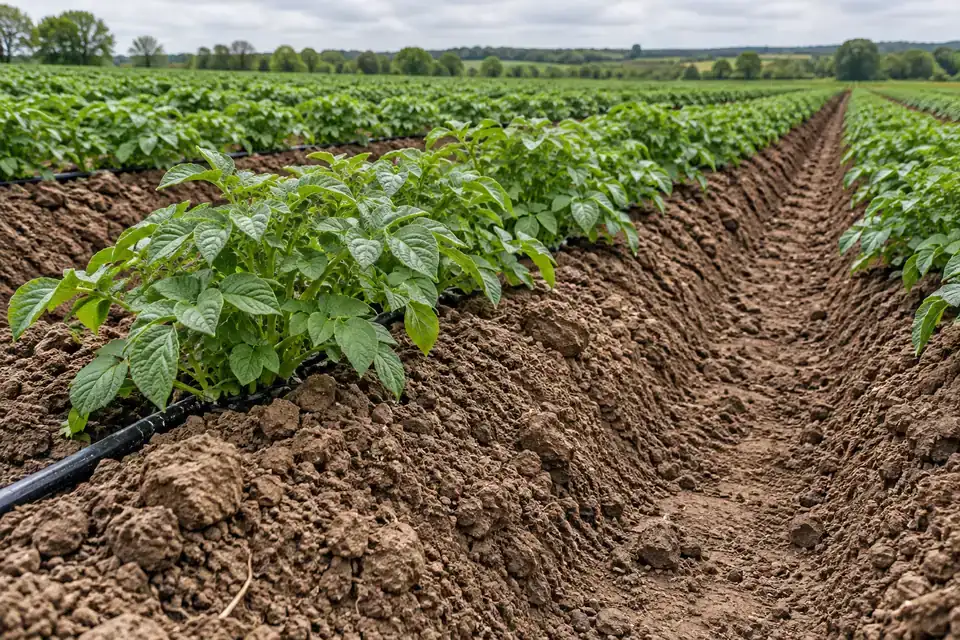
Track moisture in representative ridges during establishment and crop development. Ridges, furrows and emitter positions have different wetting patterns, so define which position each probe represents. Compare readings with the irrigation programme and field observations when reviewing a watering cycle. Record re-ridging or soil disturbance in the data history so installation changes are understood before making a season-to-season comparison.
- Measurements to observe
- Moisture response within the planted ridge through irrigation and drying periods.
- Monitoring point
- A defined ridge position and root-zone depth in each representative soil and irrigation block.
- Placement & installation
- Protect cables from ridging, lifting and harvesting equipment. Maintain soil contact and agree how probe positions will be restored after disturbance.
- Project details
- Crop, ridge geometry, soil layers, irrigation method, machinery access and seasonal installation plan.
Forage & managed grass fields
Root-zone moisture changes between watering, rainfall and cutting operations in a defined block.
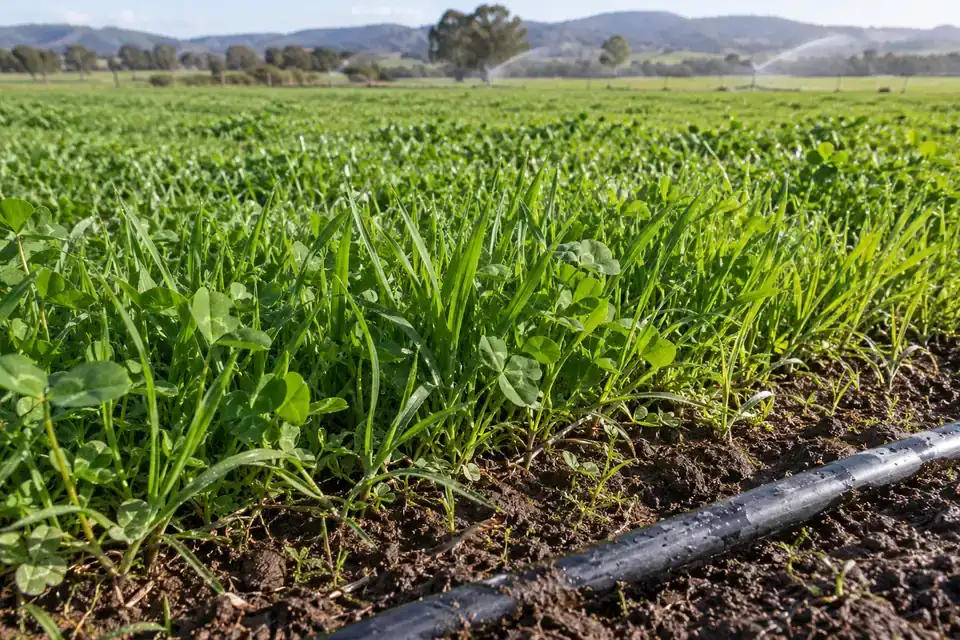
Add representative soil records to irrigated forage production or managed grass fields. Review the moisture pattern together with rainfall, irrigation and cutting dates to understand how each block behaves through the growing cycle. Different soils and irrigation coverage can justify separate points. Focus on moisture or include agreed chemistry channels where those records support the existing soil-test and nutrient-management programme.
- Measurements to observe
- Root-zone moisture changes between watering, rainfall and cutting operations in a defined block.
- Monitoring point
- Representative irrigated blocks, with soil texture, rooting position and irrigation coverage identified.
- Placement & installation
- Protect probes and cables from mowing and traffic. Place terminals outside machinery paths and record coordinates and installation dates.
- Project details
- Crop or forage mix, soil blocks, irrigation method, cutting schedule and required platform records.
Rice rotations & drained-field intervals
Soil moisture change through planned drained intervals and rotation phases, with the field state recorded.
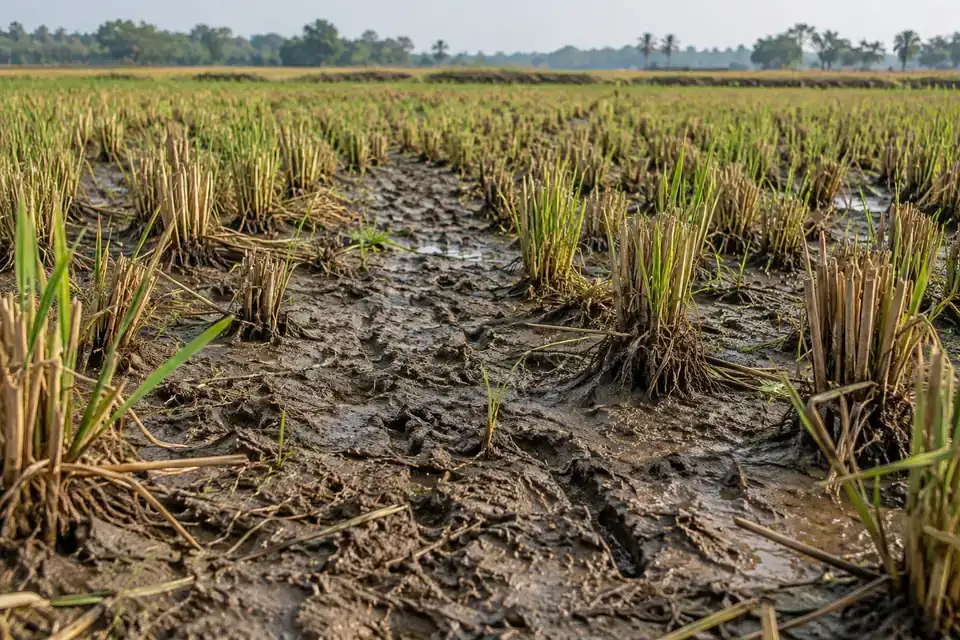
Monitor selected soil positions during drained intervals or crop rotations on rice-growing land. Compare the response with irrigation and drainage records as the management phase changes. Agree the expected moisture conditions, measurement range and probe contact for the planned soil state. Where standing-water depth is also needed, add a separately specified water-level measurement and keep its identity, units and purpose distinct from the soil record.
- Measurements to observe
- Soil moisture change through planned drained intervals and rotation phases, with the field state recorded.
- Monitoring point
- Representative soil points in the managed field, distinct from standing-water monitoring positions.
- Placement & installation
- Confirm suitability for expected saturation. Protect connections and plan service access without assuming the entire wireless terminal can be buried or submerged.
- Project details
- Field phases, soil state, flooding exposure, required channels, power and any additional water-level context.
02Orchards, vineyards & berries5 monitoring tasks +
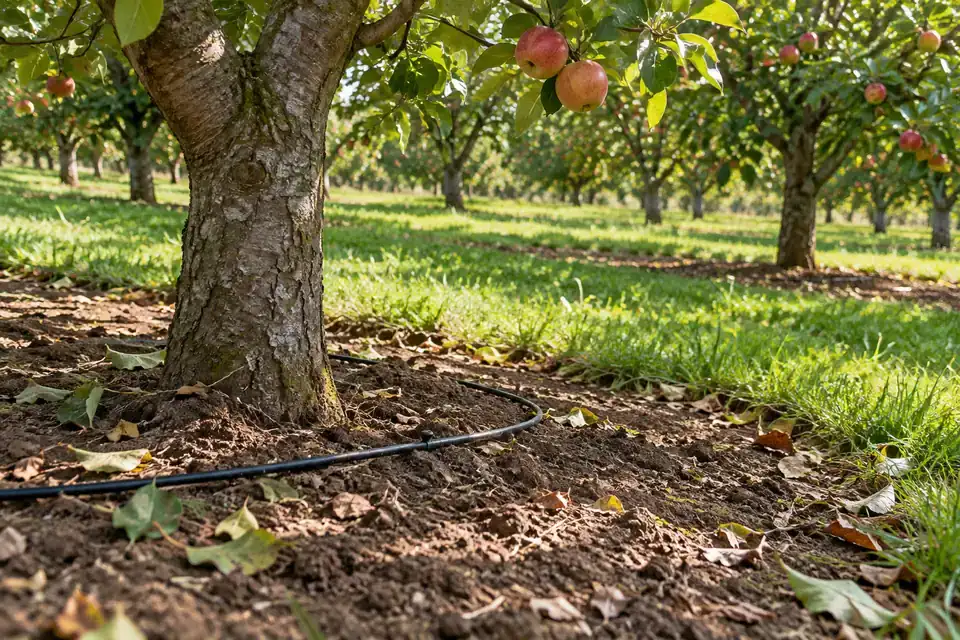
Define monitoring points around perennial crop rows, emitters and rooting patterns. Compare similar positions within management blocks and review trends through the season.
Apple orchard irrigation zones
Wetting and drying in a representative tree-root zone within an orchard irrigation block.
Observe root-zone moisture in representative apple-orchard blocks to support irrigation review and establishment care. Define the probe position relative to the tree and emitter so repeated readings describe a consistent location. Compare the response with irrigation duration, rainfall and tree-development stage. Separate blocks with different soils or irrigation arrangements, and use local soil samples where chemistry channels are included in the monitoring programme.
- Measurements to observe
- Wetting and drying in a representative tree-root zone within an orchard irrigation block.
- Monitoring point
- Selected trees with emitter offset, soil type and monitored rooting depth recorded.
- Placement & installation
- Keep cables clear of machinery, pruning debris and cultivation. Mount the terminal where it is accessible without interfering with orchard work.
- Project details
- Tree age, soil texture, emitter layout, root-zone depths, management blocks and required channels.
Citrus grove root-zone care
Root-zone wetting response and drying pattern within each defined citrus-management block.
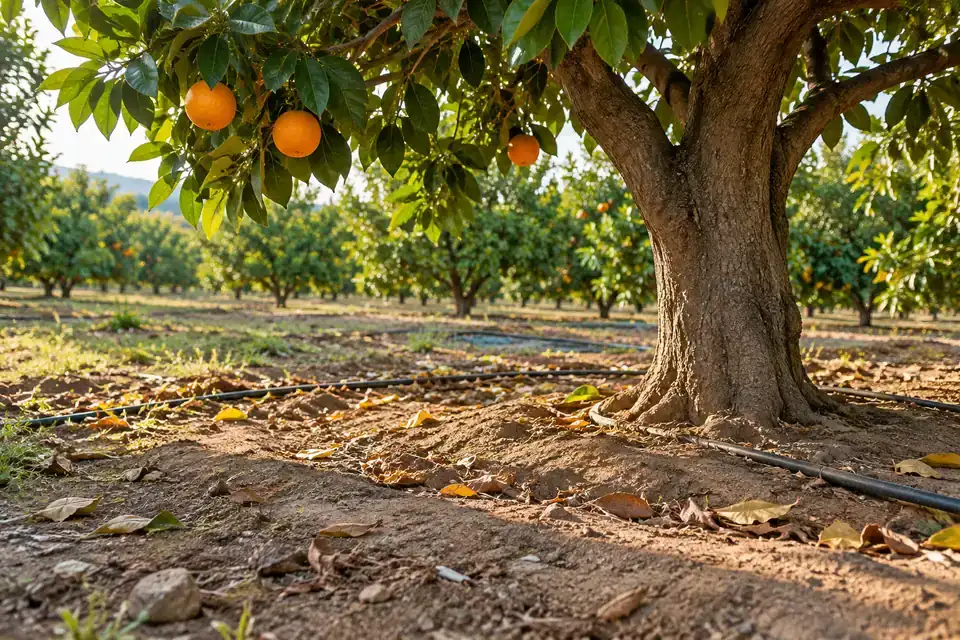
Build a consistent moisture history around representative citrus trees. Compare irrigation response between similar trees and separate soil or elevation zones where the grove varies. Readings help the team decide which block warrants a check after an irrigation change or during dry weather. If EC or pH is included, specify the measurement method and range and review the data alongside the grove’s soil-testing and nutrient-management plan.
- Measurements to observe
- Root-zone wetting response and drying pattern within each defined citrus-management block.
- Monitoring point
- Representative tree-root positions with drip or sprinkler exposure and soil zone recorded.
- Placement & installation
- Choose stable soil contact and protect cables from cultivation, mowing and vehicles. Keep the antenna in the approved arrangement and verify reception.
- Project details
- Grove layout, tree age, soil profile, irrigation method, expected EC range and soil-test programme.
Vineyard rows & drip irrigation
Wetting response and drying at a defined vine-row and emitter position through the irrigation cycle.
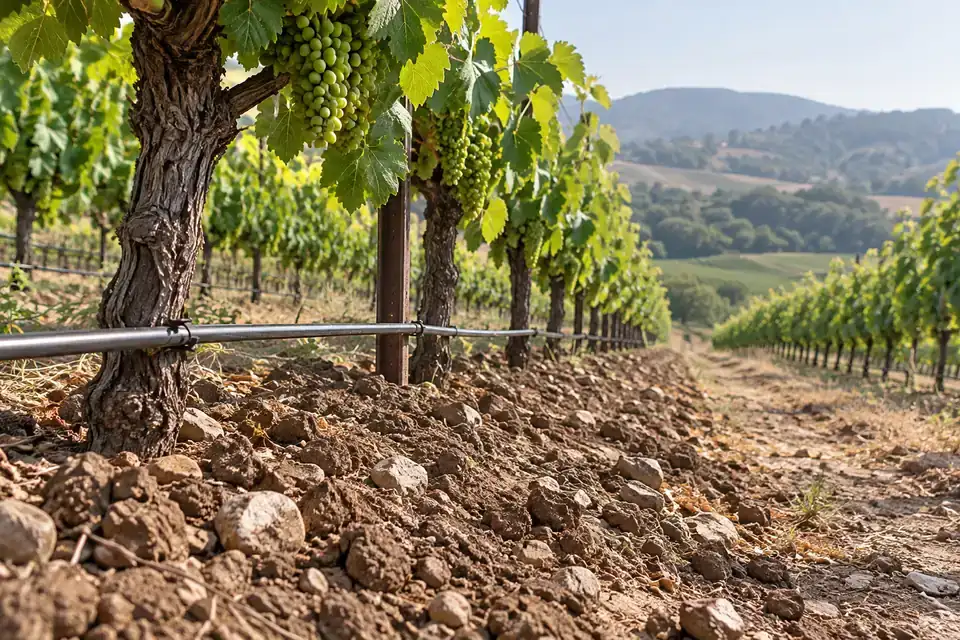
Use representative soil points to compare vineyard blocks under drip irrigation. A probe close to an emitter and one farther into the root zone answer different questions, so document the intended position and depth. Review moisture trends with irrigation records, weather and seasonal management objectives. Consistent metadata helps the team compare blocks using their local reference instead of treating every soil percentage as the same plant-water condition.
- Measurements to observe
- Wetting response and drying at a defined vine-row and emitter position through the irrigation cycle.
- Monitoring point
- Representative vine rows within comparable soil, irrigation and rooting zones.
- Placement & installation
- Protect cables from inter-row cultivation and machinery. Keep positions identifiable and record any relocation, soil disturbance or change in irrigation layout.
- Project details
- Variety and planting age, soil blocks, emitter spacing, monitored depths and seasonal review objectives.
Berry beds & covered root zones
Wetting and drying beneath mulch at a representative berry-root position during irrigation cycles.
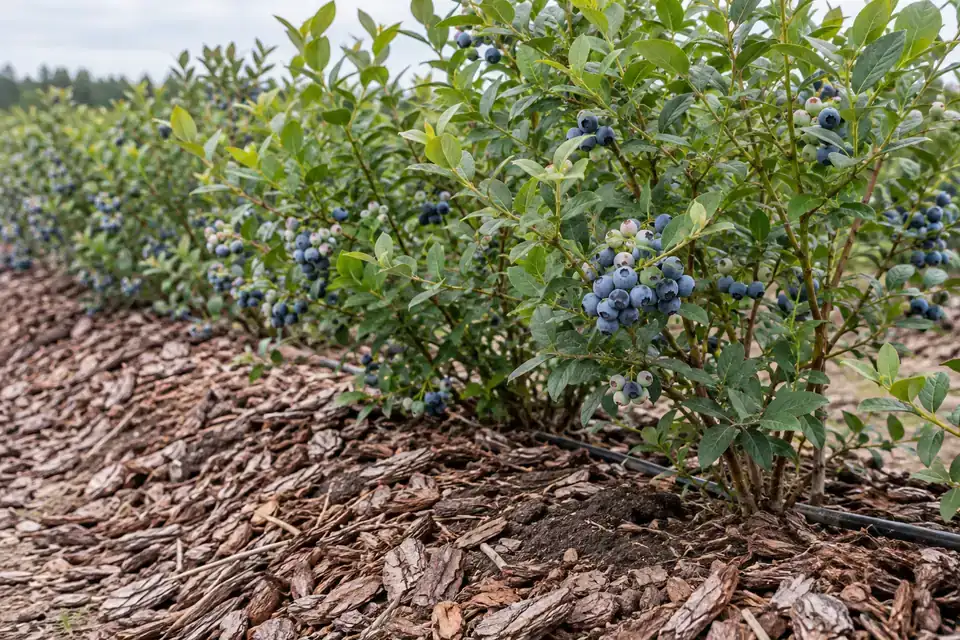
Follow moisture in berry beds or planted root zones beneath mulch. Maintain a defined position relative to the plant and drip line to compare short watering cycles. Media-filled beds and mineral soils need their own measurement reference, especially when EC or pH is included. Pair the time series with planting and irrigation records so each zone can be reviewed through establishment and production.
- Measurements to observe
- Wetting and drying beneath mulch at a representative berry-root position during irrigation cycles.
- Monitoring point
- Selected beds or root zones, with growing medium and emitter relationship documented.
- Placement & installation
- Maintain contact with the medium rather than an air gap beneath mulch. Protect cables from harvesting and bed maintenance, and document seasonal reinstallation.
- Project details
- Berry type, bed medium, mulch, irrigation cycle, expected EC/pH range and reference checks.
Tea plantation soil zones
Moisture response to rainfall or irrigation across defined soil and tea-planting zones.
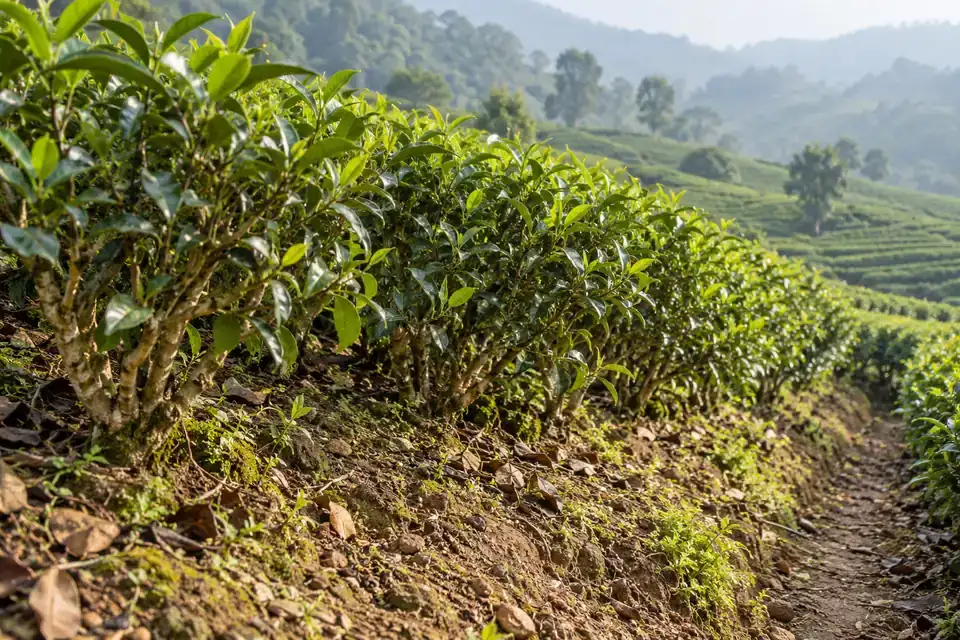
Compare moisture trends across representative tea-planting zones, considering slope position and soil variation. Rainfall affects upper and lower areas differently, so retain separate histories for the relevant management groups. Include pH or EC where the agreed method supports the soil-management programme. Use readings with weather, field observations and periodic soil samples when planning watering or reviewing changes in the planting environment.
- Measurements to observe
- Moisture response to rainfall or irrigation across defined soil and tea-planting zones.
- Monitoring point
- Representative root-zone positions within slope, soil and planting-management groups.
- Placement & installation
- Avoid disturbing established roots and protect cables from field work. Mount terminals where maintenance access and radio coverage have been checked.
- Project details
- Soil and slope zones, planting age, irrigation availability, channels, sampling reference and maintenance access.
03Greenhouses & nurseries5 monitoring tasks +
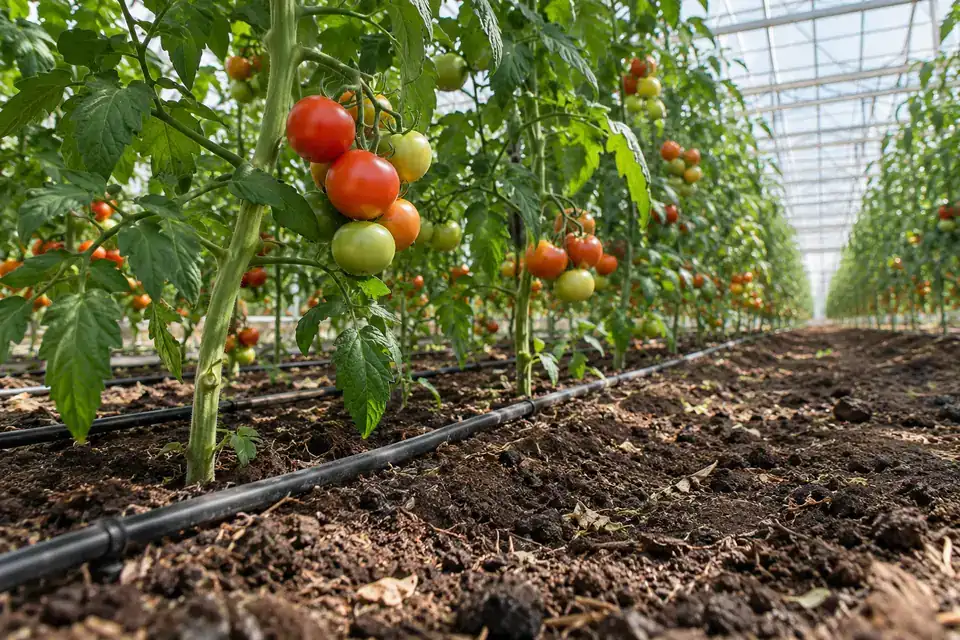
Select the probe and calibration around soil beds, growing bags or containers. Keep crop, medium, irrigation and reference testing together when reviewing the data.
Greenhouse soil-bed cultivation
Moisture changes in the selected crop-root zone during short greenhouse watering cycles.
Compare root-zone moisture before and after irrigation in greenhouse soil beds. Keep probe position, crop stage and irrigation valve group with each record so short watering cycles are reviewed consistently. EC and pH can add soil-management context when their method and range are specified. Pair the readings with irrigation and sampling records, using representative points for each management group rather than one greenhouse-wide assumption.
- Measurements to observe
- Moisture changes in the selected crop-root zone during short greenhouse watering cycles.
- Monitoring point
- Representative soil beds within common crop, soil and irrigation-management groups.
- Placement & installation
- Maintain soil contact and protect cables during crop changes. Check reception around metal frames and dense planting at the actual terminal position.
- Project details
- Crop, soil beds, watering schedule, chosen channels, expected ranges and greenhouse platform connection.
Growing bags & substrate cultivation
Wetting response and drying at a validated substrate position during the growing-bag irrigation cycle.
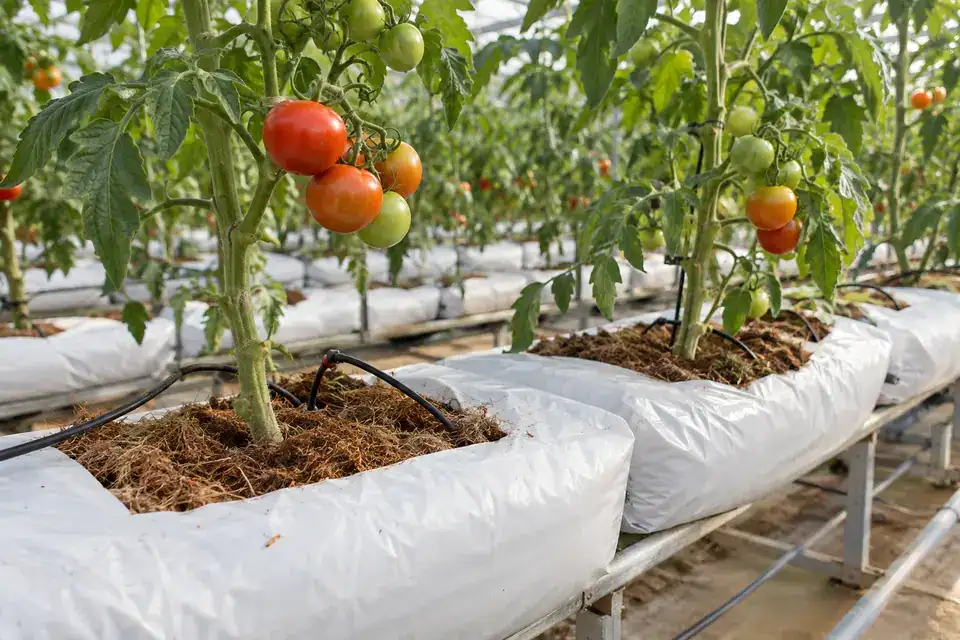
Monitor a selected growing bag where probe fit and calibration are validated for its substrate. Record the medium, irrigation arrangement and representative planting group. Review moisture with watering and drain observations to compare cycles and prioritize inspections. EC and pH require a defined method and suitable range for the medium; specify them within the configuration rather than applying an unrelated mineral-soil reference.
- Measurements to observe
- Wetting response and drying at a validated substrate position during the growing-bag irrigation cycle.
- Monitoring point
- A representative growing bag with medium, crop, emitter arrangement and sensing position identified.
- Placement & installation
- Confirm probe fit and contact without damaging the bag or irrigation system. Protect connectors and keep cables clear of crop-service work.
- Project details
- Substrate composition, bag dimensions, irrigation and drain observations, channel method, range and calibration.
Seedling beds & tray programmes
Moisture response in a validated seedling bed or compatible representative growing-container position.
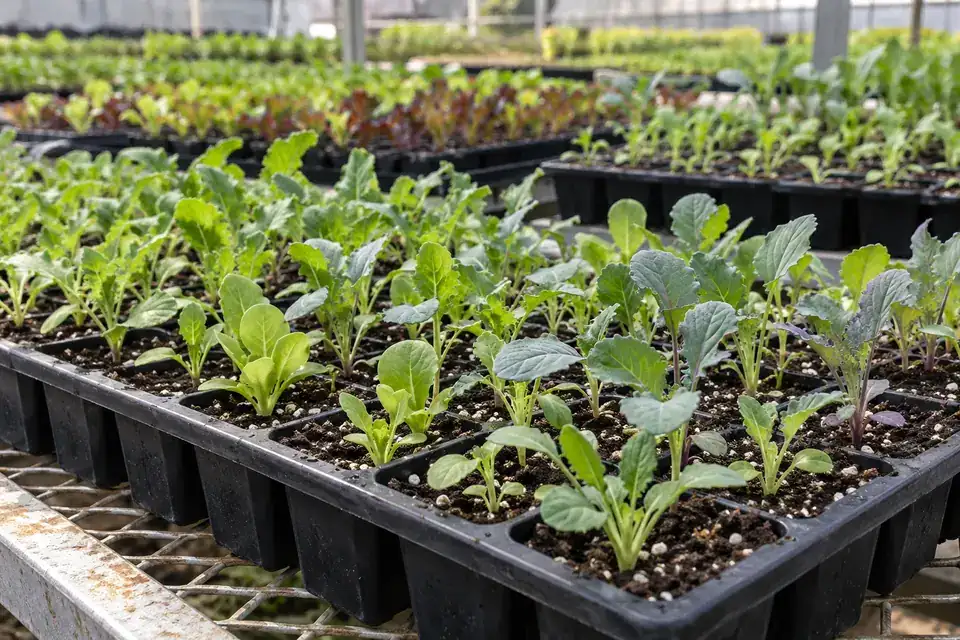
Add soil or substrate measurements to a nursery programme where the chosen probe fits the growing volume and its response is validated. Shallow trays and larger seedling beds need different arrangements, so define the point around the actual container or bed. Track wetting and drying with watering records and crop stage. Representative measurements support nursery checks within a clearly identified crop and irrigation group.
- Measurements to observe
- Moisture response in a validated seedling bed or compatible representative growing-container position.
- Monitoring point
- A growing volume compatible with the selected probe, assigned to a defined seedling and watering group.
- Placement & installation
- Verify dimensions, contact and medium response before deployment. Protect roots and keep the probe within one continuous medium rather than bridging containers.
- Project details
- Tray or bed dimensions, medium, crop stage, probe fit, irrigation groups and verification method.
Container-grown ornamental nurseries
Wetting and drying in representative nursery containers within each crop and irrigation group.
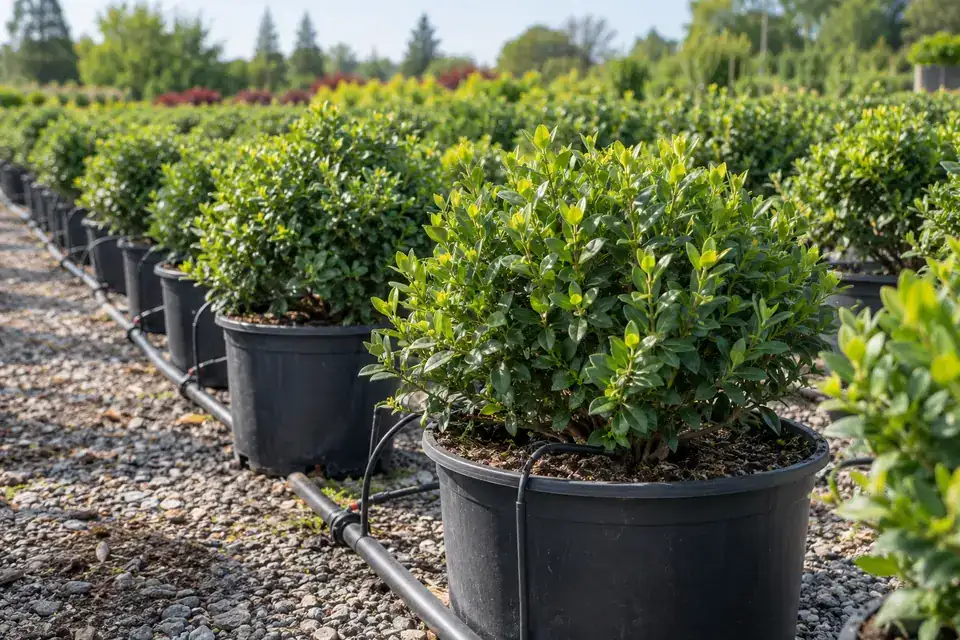
Compare watering response in representative containers across an ornamental nursery. Choose containers that reflect crop size, medium and irrigation zone, retaining those identifiers with the data. Different pot sizes and mixes may require separate references. Moisture trends help prioritize a watering review or inspection, with chemistry channels included where their specified range and method match the container medium and the nursery’s management programme.
- Measurements to observe
- Wetting and drying in representative nursery containers within each crop and irrigation group.
- Monitoring point
- Containers selected by plant size, growing medium, irrigation method and production zone.
- Placement & installation
- Confirm probe fit within the root volume and maintain medium contact. Protect the installation during container movement and routine nursery handling.
- Project details
- Container sizes, crop groups, medium composition, irrigation arrangement, probe dimensions and expected channel ranges.
New planting & transplant establishment
Wetting and drying at the defined root-ball or surrounding-soil position following planting and watering.
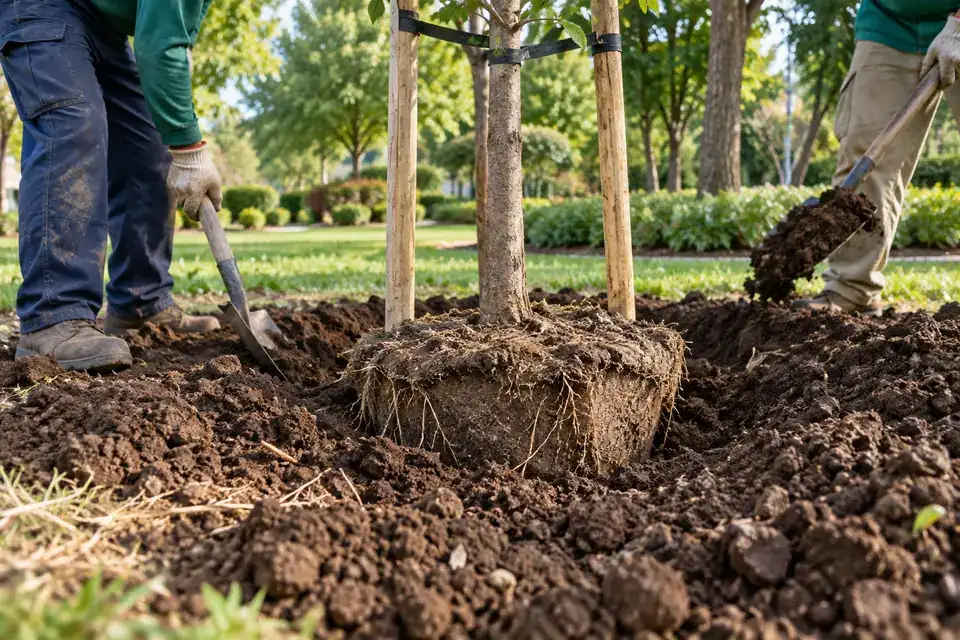
Follow moisture around newly transplanted trees or shrubs during establishment. A root ball and the surrounding soil respond differently to watering, so identify exactly which position the point represents. Use the series with planting dates, watering visits and plant inspections to plan follow-up care. Where soil and planting conditions vary, give each useful group its own representative reference rather than relying on a single site-wide reading.
- Measurements to observe
- Wetting and drying at the defined root-ball or surrounding-soil position following planting and watering.
- Monitoring point
- Representative transplants grouped by root ball, soil conditions, planting date and irrigation arrangements.
- Placement & installation
- Install without damaging roots or supports. Keep the probe and cable clear for planting care, mulch changes and scheduled maintenance visits.
- Project details
- Plant type, root-ball size, planting soil, establishment period, watering responsibility and required reporting.
04Parks, gardens & heritage trees6 monitoring tasks +
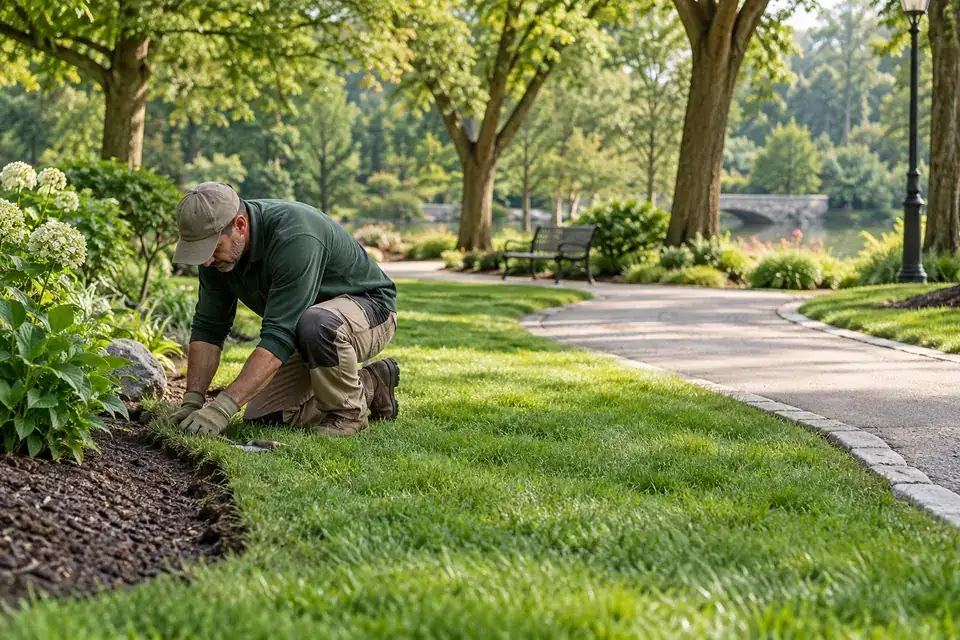
Define useful maintenance zones for lawns, gardens, managed turf and tree-root areas, including ancient and veteran trees. Soil trends add context to watering and care visits, with protected-root installations planned by a qualified tree-care specialist.
Municipal park lawns
Root-zone moisture changes within defined lawn-irrigation and soil-management zones through watering and drying cycles.
Create soil records for representative lawn-irrigation zones in public parks. Compare wetting response and drying with irrigation settings, rainfall and grounds observations. Sunny, shaded and differently textured soils may require separate points. Link each reading to the maintenance area it represents so crews can review a specific zone. A consistent local history helps organize inspection and watering review across a varied landscape.
- Measurements to observe
- Root-zone moisture changes within defined lawn-irrigation and soil-management zones through watering and drying cycles.
- Monitoring point
- Representative lawn positions selected by soil, shade, slope and irrigation coverage.
- Placement & installation
- Protect probes and cables from mowing, aeration and pedestrians. Keep terminal mounting accessible and clear of public circulation and routine maintenance routes.
- Project details
- Lawn zones, soil texture, mowing and aeration plan, irrigation groups, reception and maintenance workflow.
Landscape trees & planted root zones
The local wetting and drying pattern around a representative landscape-tree root zone.
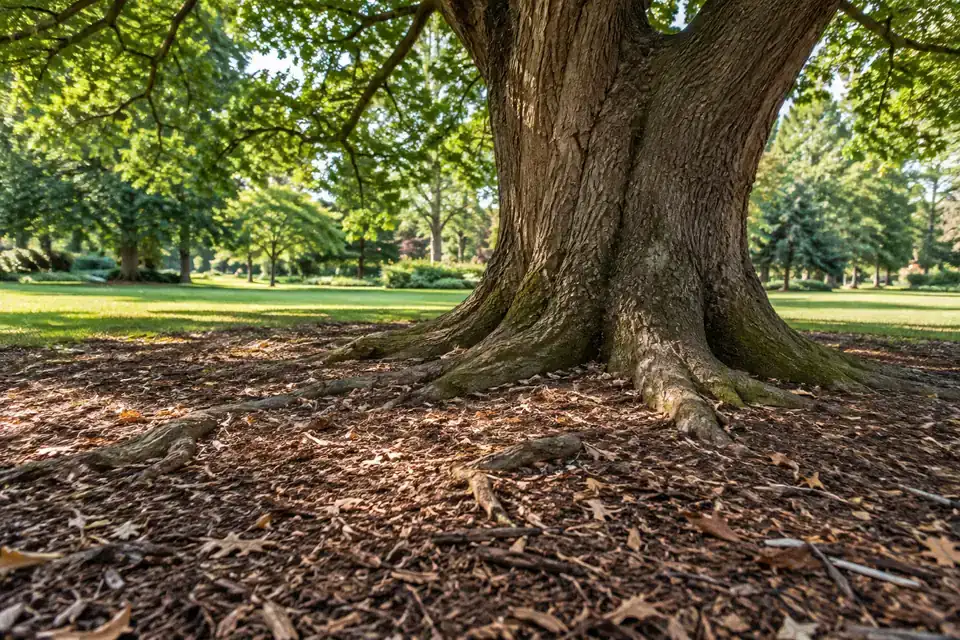
Add defined soil points to established or recently planted landscape trees. Review moisture with watering and plant inspections, especially when tree age, shade or planting soil differs across the site. Position the probe to represent the intended root zone rather than an arbitrary location near the trunk. The record supports planned care visits and irrigation review while keeping the tree or planting group’s context visible.
- Measurements to observe
- The local wetting and drying pattern around a representative landscape-tree root zone.
- Monitoring point
- Selected soil positions with the root-ball or surrounding-root-zone objective clearly identified.
- Placement & installation
- Respect roots and public access during installation. Protect cables from edging, mowing and mulch work, and locate the terminal outside maintenance routes.
- Project details
- Tree age, planting plan, soil volume, rooting objective, watering method and inspection programme.
Seasonal flower beds & planted displays
Wetting and drying in a defined display-bed and irrigation-management group through the planting season.
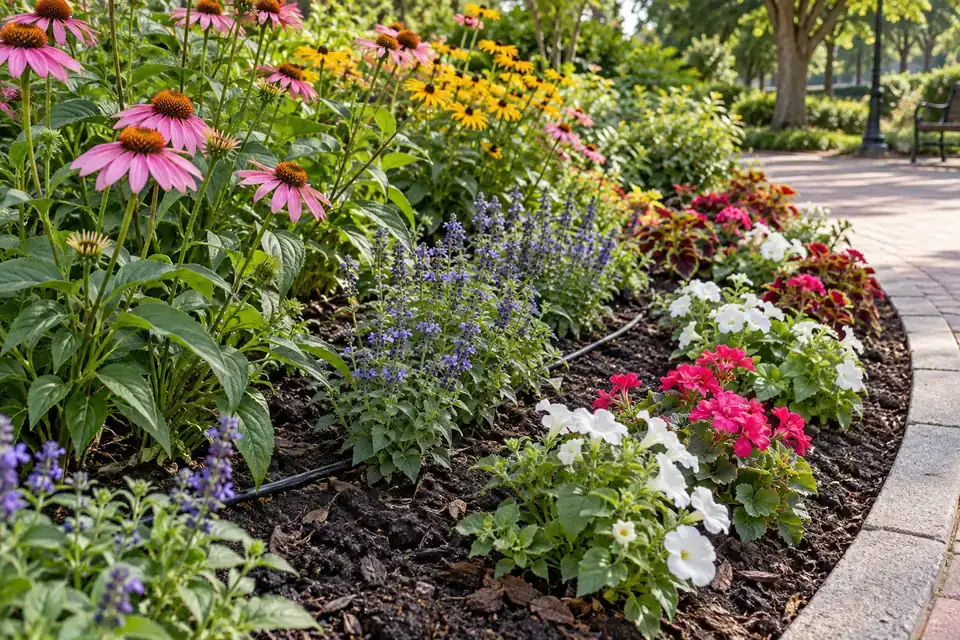
Monitor representative soil or medium points in seasonal display beds. Planting dates, exposure and irrigation valves produce different watering patterns, so retain those groups in the records. Compare moisture with watering visits and weather to decide which display needs a check. If the medium changes during seasonal renewal, review placement and the measurement reference before comparing the new cycle with the previous display.
- Measurements to observe
- Wetting and drying in a defined display-bed and irrigation-management group through the planting season.
- Monitoring point
- Representative beds selected by medium, planting stage, exposure and irrigation layout.
- Placement & installation
- Maintain probe contact and protect cables during renewal and cultivation. Record medium changes, probe relocation and installation dates with the planting cycle.
- Project details
- Bed layout, seasonal crops, medium, irrigation valves, renewal schedule and maintenance-alert recipients.
Golf-course managed turf
Moisture response in the selected turf-root medium within a defined irrigation-management area.
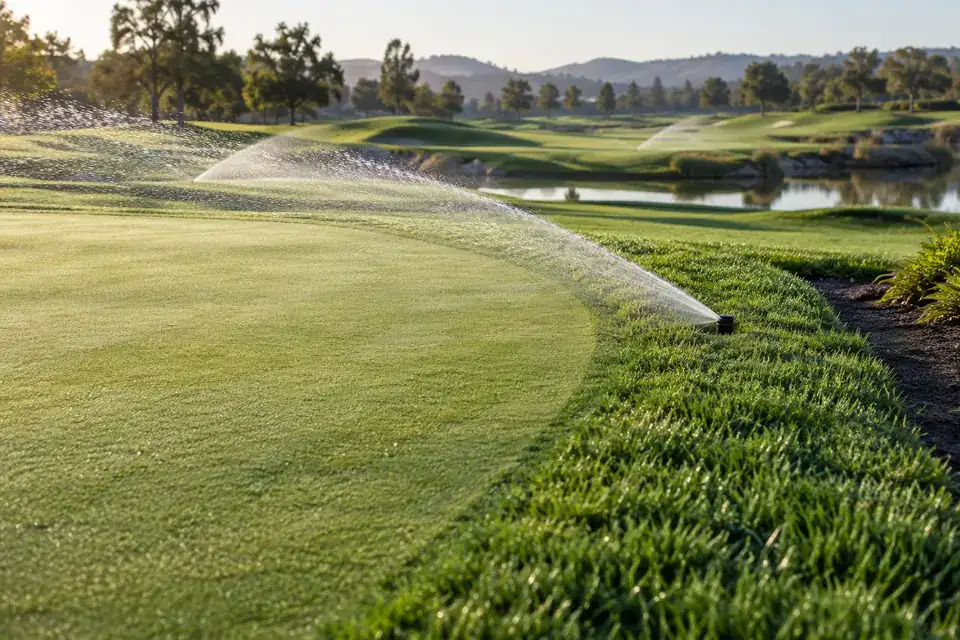
Record moisture at defined turf points to support irrigation and grounds review. Greens, fairways and surrounding planting have different root-zone materials and maintenance schedules, so specify the area and medium each configuration represents. Combine the time series with irrigation, rainfall and grounds observations. State probe fit, calibration and installation access for the selected turf construction before extending a pilot to more management zones.
- Measurements to observe
- Moisture response in the selected turf-root medium within a defined irrigation-management area.
- Monitoring point
- Representative turf points identified by root-zone construction, exposure and irrigation group.
- Placement & installation
- Confirm medium compatibility and protect probes from aeration, mowing and machinery. Agree cable routes and terminal access with the grounds team.
- Project details
- Turf area, root-zone material, irrigation layout, cultivation programme, probe method and reporting objective.
Natural-grass sports fields
Wetting and drying across defined natural-grass irrigation sectors and maintenance zones.
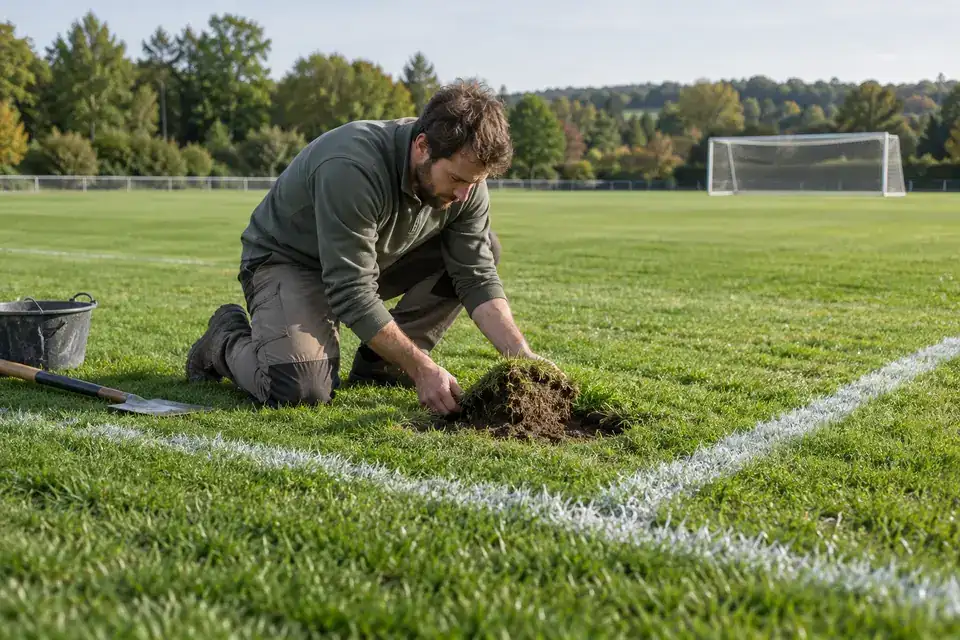
Use representative root-zone records in natural-grass field maintenance. Compare watering across irrigation sectors and exposure zones alongside rainfall and grounds inspections. Agree whether the objective is routine irrigation review or establishment after renovation, as each requires its own records and maintenance schedule. Match the configuration to the actual root-zone medium, probe contact and service access needed for a busy playing surface.
- Measurements to observe
- Wetting and drying across defined natural-grass irrigation sectors and maintenance zones.
- Monitoring point
- Validated root-zone medium at representative positions, with irrigation sector and exposure recorded.
- Placement & installation
- Protect cables and probes from aeration, mowing and play. Agree service access and protection without introducing hazards to the playing surface.
- Project details
- Root-zone construction, irrigation sectors, renovation cycle, grounds equipment and required observations.
Ancient & veteran trees
Local soil moisture, and temperature where included, interpreted alongside rainfall, soil type and an arborist’s assessment of watering needs.

Ancient and veteran trees need careful stewardship of the soil supporting their roots. Track local moisture through dry spells and rainfall to inform arborist-led watering and site management. Add soil temperature where included in the selected configuration. Protect roots and soil structure by retaining leaf litter and natural ground cover, excluding traffic and machinery, and using only a specialist-approved installation method. Compare representative soil locations within the agreed monitoring plan. These local readings complement professional tree inspections and describe the soil environment around each sensing point.
- Measurements to observe
- Local soil moisture, and temperature where included, interpreted alongside rainfall, soil type and an arborist’s assessment of watering needs.
- Monitoring point
- Select representative soil positions with a veteran-tree specialist. Document soil, shade and sensing depth, and avoid major roots, sensitive habitats and locations excluded by the protection plan.
- Placement & installation
- Agree the method with a veteran-tree specialist before installation. Keep gateways, access routes and cable trenches outside the protection area; prevent excavation, root damage and soil compaction within it.
- Project details
- Provide tree records, the specialist’s root protection plan, soil and drainage information, drought-management objectives, permitted monitoring locations, access restrictions, reporting needs and the responsible conservation team.
05Street trees & roadside planting5 monitoring tasks +
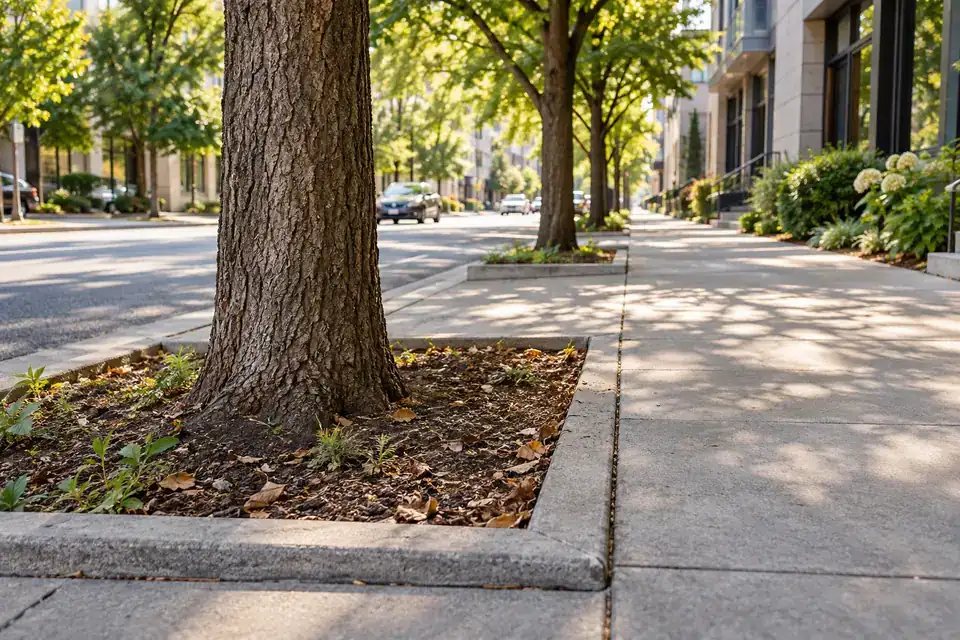
Monitor the soil that supports urban planting. Tree pits, medians and planted road verges need protected installations and a clear link to the landscape-care workflow.
Street-tree root-zone monitoring
Root-zone moisture changes after watering and rainfall, and the drying pattern between visits, with additional soil channels selected for the project.
Street trees often grow in small planting pits where the root ball and surrounding soil receive water differently. A defined soil monitoring point adds a record of wetting and drying between maintenance visits. Compare that record with watering routes, rainfall and tree inspections to plan follow-up care for newly planted or established trees. Select locations that represent the planted soil rather than the adjacent pavement, and document changes to mulch or irrigation.
- Measurements to observe
- Root-zone moisture changes after watering and rainfall, and the drying pattern between visits, with additional soil channels selected for the project.
- Monitoring point
- Choose representative planted soil around the active rooting area. For new trees, consider separate points in the root ball and surrounding planting soil.
- Placement & installation
- Position the probe with consistent soil contact and approved root-zone depth. Protect its cable and terminal from foot traffic, tree ties and routine landscape tools.
- Project details
- Share tree species, planting age, pit dimensions, root-ball material, watering method and maintenance routes, together with required channels, communications coverage and approximate tree numbers.
Planted road medians
Moisture response within planted median beds, including differences between irrigation zones and the duration of drying after scheduled maintenance watering.
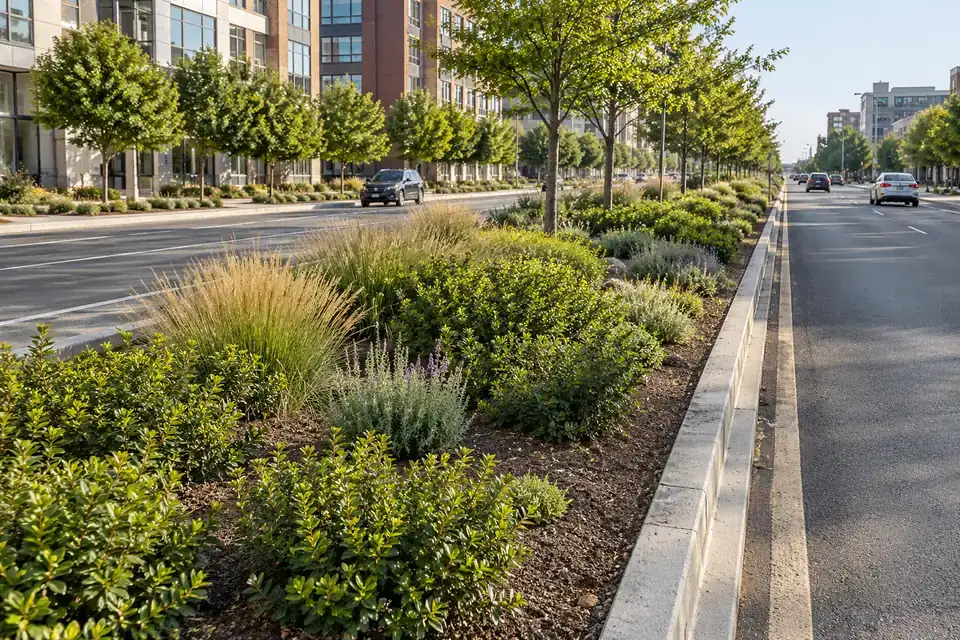
Planted medians can contain several soil and irrigation conditions along the same road. Monitor selected shrub, grass or tree beds to compare their moisture response with the maintenance schedule. Records help the landscape team decide where to inspect emitters, revisit recently planted sections or review watering duration. Organize readings by planted management zone so that a dry stretch and a shaded bed receive attention appropriate to their local conditions.
- Measurements to observe
- Moisture response within planted median beds, including differences between irrigation zones and the duration of drying after scheduled maintenance watering.
- Monitoring point
- Locate points in representative planting soil within each selected irrigation zone. Record soil depth, planting type and distance from the local water outlet.
- Placement & installation
- Coordinate installation with approved traffic-management and landscaping access. Keep sensing elements in soil and protect terminal mounts and cables from mowing and edging operations.
- Project details
- Provide a median planting plan, bed sections, irrigation-zone boundaries, soil specification and maintenance access arrangements, plus the preferred reporting interval and available wireless coverage.
Roundabout landscape irrigation
Moisture differences between raised and perimeter planting beds, their response to irrigation, and the subsequent drying trend at each defined point.
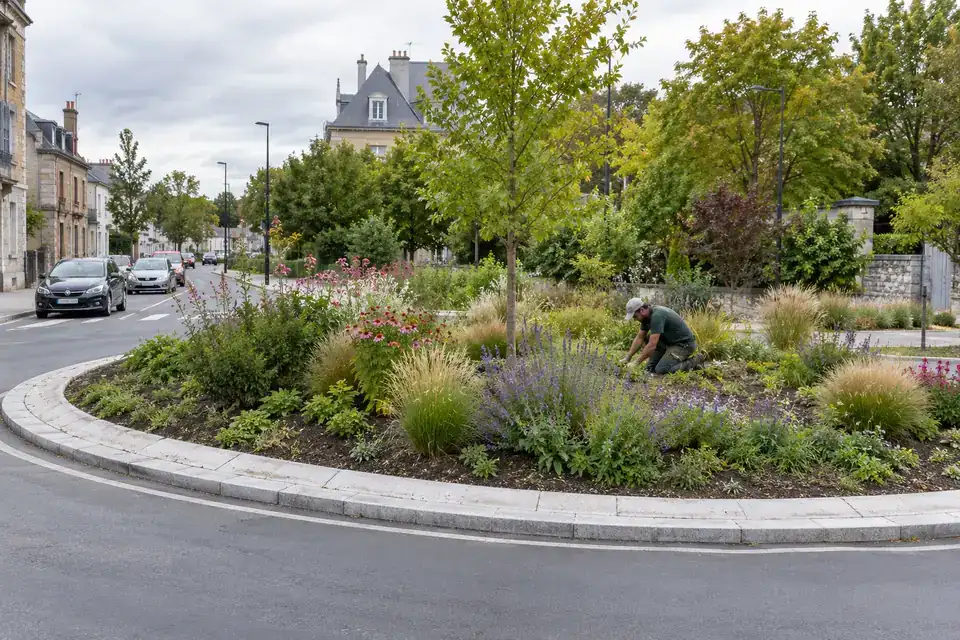
A landscaped roundabout may combine a raised central bed, exposed perimeter planting and several plant types within one maintenance site. Establish soil monitoring points that distinguish these planting areas rather than treating the entire island as one moisture condition. Compare wetting patterns after irrigation and observe how quickly each selected location dries. The resulting record supports targeted landscape inspections and helps crews review watering plans around planting changes or seasonal weather.
- Measurements to observe
- Moisture differences between raised and perimeter planting beds, their response to irrigation, and the subsequent drying trend at each defined point.
- Monitoring point
- Select points within the central and perimeter root zones where planting or exposure differs. Keep each point associated with its irrigation circuit and soil profile.
- Placement & installation
- Use approved access to the planted island and install during scheduled landscape works. Place cables beneath protected soil routes and retain access to the terminal.
- Project details
- Share the roundabout planting layout, bed elevations, plant groups, irrigation circuits, soil depth and access windows, along with required monitoring channels and expected point quantities.
Highway verge planting care
Local soil moisture during verge planting establishment, including rainfall response, drying between watering rounds and differences across selected exposure conditions.
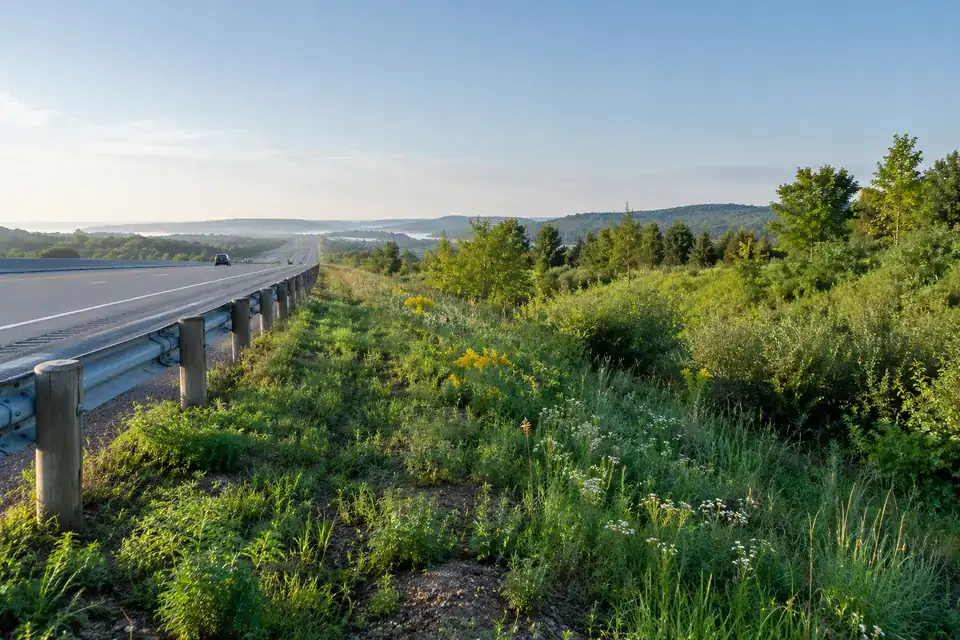
Roadside revegetation and newly planted highway verges benefit from a documented view of local soil conditions between site visits. Select monitoring points across representative planting areas, such as an exposed verge and a sheltered shrub bed. Compare moisture trends with rainfall, watering rounds and establishment inspections. Use the record to organize follow-up care during the agreed planting-maintenance period, with communications and equipment protection matched to the roadside working environment.
- Measurements to observe
- Local soil moisture during verge planting establishment, including rainfall response, drying between watering rounds and differences across selected exposure conditions.
- Monitoring point
- Choose representative soil within the planted verge at an approved distance from road operations. Record plant cover, soil depth and local exposure for each point.
- Placement & installation
- Agree access and equipment positions with the site operator. Protect the probe, cables and terminal against mowing, maintenance vehicles and disturbance during verge works.
- Project details
- Provide the verge planting sections, establishment period, watering logistics, soil materials, mowing plan and wireless coverage, together with required point numbers and reporting frequency.
Roadside slope revegetation
Wetting and drying trends in selected slope planting soils, including differences between upper and lower root zones during vegetation establishment.
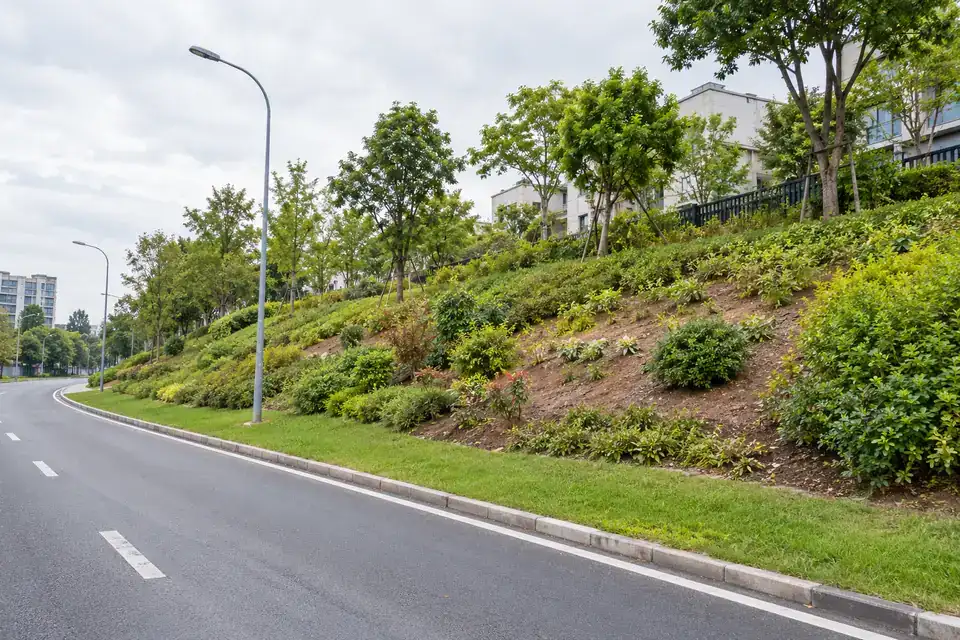
Vegetation on a roadside slope can experience different soil moisture conditions at the upper, middle and lower planting areas. Establish selected points to observe these local differences during revegetation and ongoing landscape care. Compare trends after rainfall or irrigation with planting inspections and the agreed maintenance plan. The focus is the soil environment around vegetation: a well-documented monitoring layout helps crews review establishment care for each planted section of the slope.
- Measurements to observe
- Wetting and drying trends in selected slope planting soils, including differences between upper and lower root zones during vegetation establishment.
- Monitoring point
- Position probes within representative root-zone soil at selected slope elevations. Document soil cover thickness, plant type and the local rainfall or irrigation exposure.
- Placement & installation
- Follow the approved revegetation layout and safe maintenance access plan. Minimize disturbance to planting mats, and protect cable routes from trimming and earthworks.
- Project details
- Share planted-slope sections, soil cover, vegetation mix, establishment objectives, irrigation arrangements and site-access requirements, plus the intended observation period and chosen wireless option.
06Rain gardens & green infrastructure5 monitoring tasks +
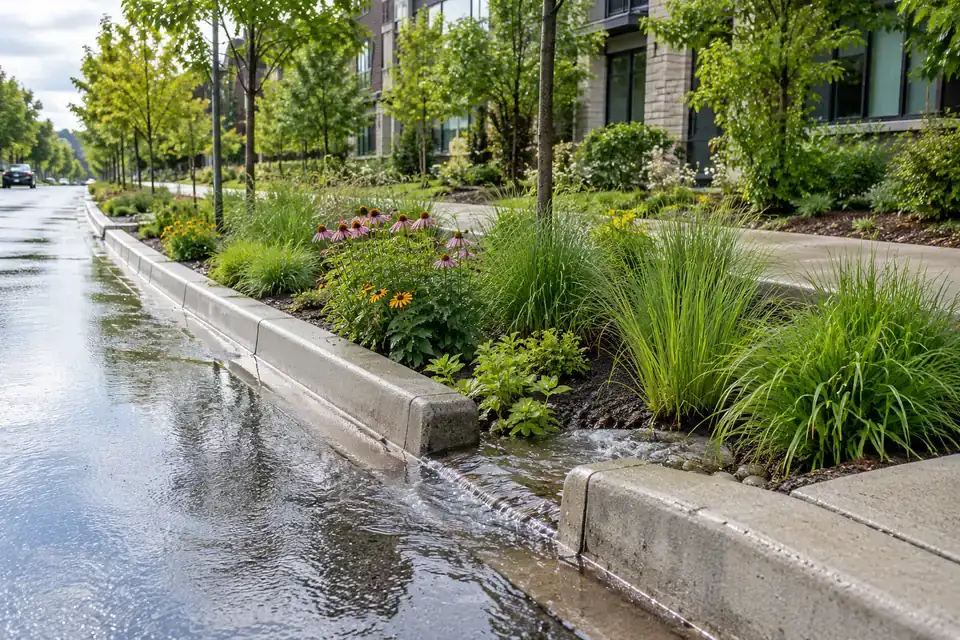
Observe how validated planting media or underlying soil responds to rainfall. Combine moisture trends with drainage observations and the site inspection programme.
Rain garden soil response
Rainfall-related wetting and subsequent drying in selected planted soil zones, with comparison to rainfall events, visible ponding and establishment watering records.
Rain gardens combine planted areas that receive runoff with surrounding soil that may remain drier. Monitor selected growing zones to record the response to rainfall and the return toward their usual moisture condition. Combine these trends with rainfall records, visible ponding and plant inspections when planning maintenance or establishment watering. A clearly identified soil point provides useful context for comparing storms and dry periods without treating soil moisture as a water-level measurement.
- Measurements to observe
- Rainfall-related wetting and subsequent drying in selected planted soil zones, with comparison to rainfall events, visible ponding and establishment watering records.
- Monitoring point
- Select representative planted soil in the lower receiving area and, where useful, a higher margin. Record each point's depth and position relative to the inlet.
- Placement & installation
- Install with consistent contact in the selected soil or verified planting medium. Preserve the garden's drainage features and protect equipment from sediment-clearing and planting work.
- Project details
- Provide the rain garden section, growing medium, planting zones, runoff entry points and maintenance objectives, with the intended rainfall records, observation period and reporting requirements.
Vegetated swale planting zones
Moisture response along selected planted sections of a swale, including post-rainfall persistence and drying differences between upstream and downstream monitoring points.
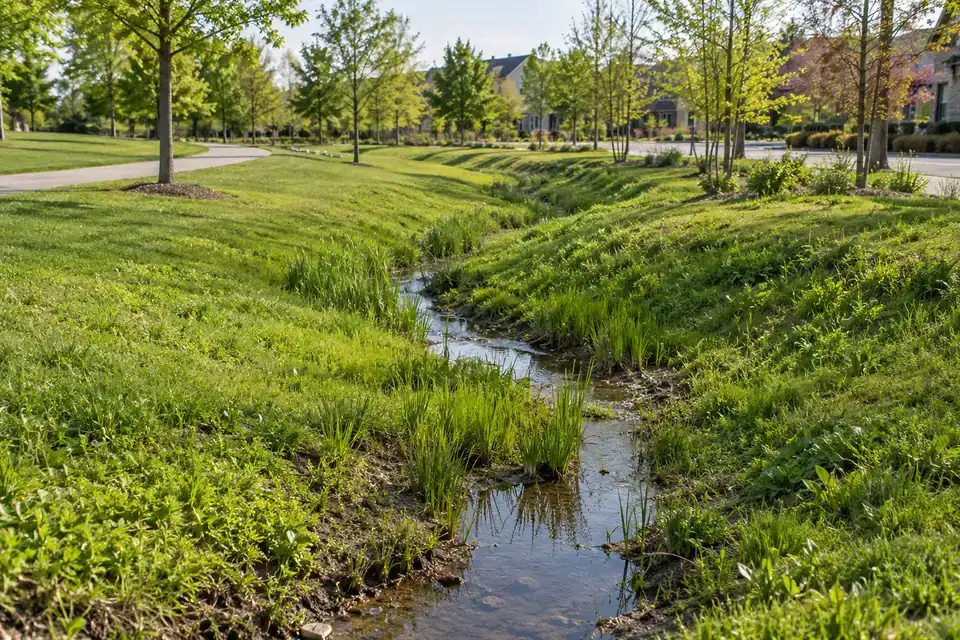
A vegetated swale carries runoff along a planted corridor, so the soil response can differ between its inlet, middle and downstream sections. Monitoring selected root-zone locations creates a record of these differences through wet and dry weather. Compare moisture changes with rainfall, maintenance observations and planting condition to guide inspections and establishment care. Map every point to the swale layout so that repeated observations refer to the same planted area and soil depth.
- Measurements to observe
- Moisture response along selected planted sections of a swale, including post-rainfall persistence and drying differences between upstream and downstream monitoring points.
- Monitoring point
- Choose soil points in representative vegetation zones along the swale. Keep placement and depth consistent when comparing upstream, middle and downstream planting areas.
- Placement & installation
- Locate equipment outside routine clearing paths and preserve the designed flow route. Secure cables and ensure the probe remains in contact with verified planting soil.
- Project details
- Share the swale plan, cross-sections, planting medium, runoff direction and clearing procedures, together with the points to compare, monitoring duration and available platform requirements.
Bioretention growing-medium monitoring
Moisture changes within the specified bioretention growing medium after rainfall, during drainage recovery and between establishment watering or seasonal maintenance visits.
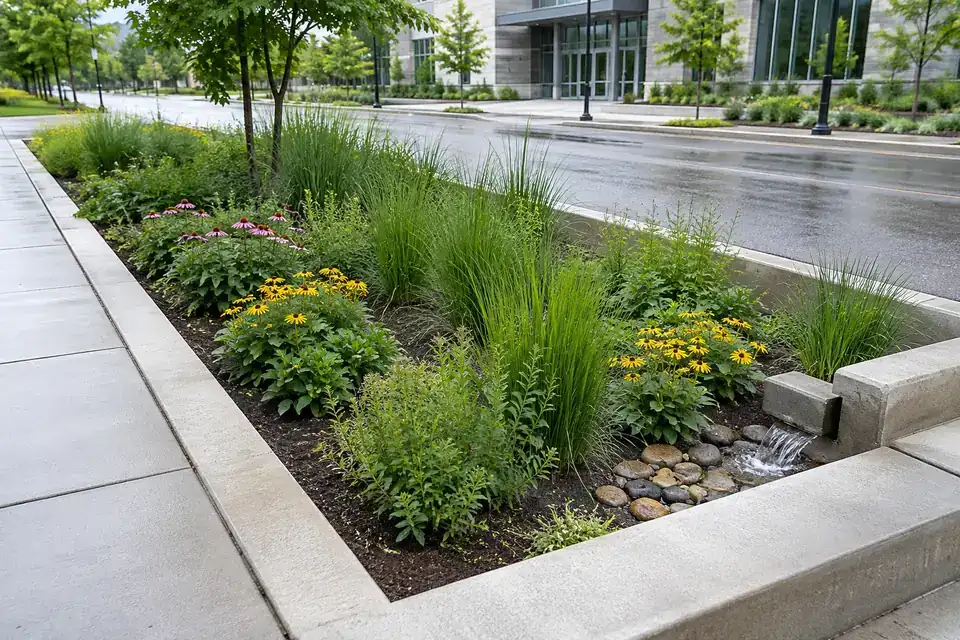
Engineered bioretention beds use a specified growing medium, planting layout and drainage arrangement. A project-validated probe configuration can record moisture at selected positions within that medium, helping the maintenance team compare rainfall response and dry-weather planting conditions. Pair soil trends with inlet inspections, ponding observations and drainage records. Establish the medium's baseline before comparing different cells, and use the monitoring record as one part of the site's defined operation and maintenance programme.
- Measurements to observe
- Moisture changes within the specified bioretention growing medium after rainfall, during drainage recovery and between establishment watering or seasonal maintenance visits.
- Monitoring point
- Locate points in defined growing-medium zones with recorded depth and composition. Where cells are compared, select equivalent positions relative to inlets, planting and drainage.
- Placement & installation
- Validate the probe response in the specified medium before rollout. Follow approved cell details, maintain soil contact and preserve liners, underdrains and access for routine maintenance.
- Project details
- Provide cell drawings, growing-medium specification, planting and drainage details, baseline testing approach and maintenance questions, plus requested measurement channels, platform access and reporting intervals.
Root zones beside permeable paving
Rainfall response in adjacent planted root zones or verified underlying soil, and the subsequent moisture trend alongside surface infiltration and landscape inspection records.
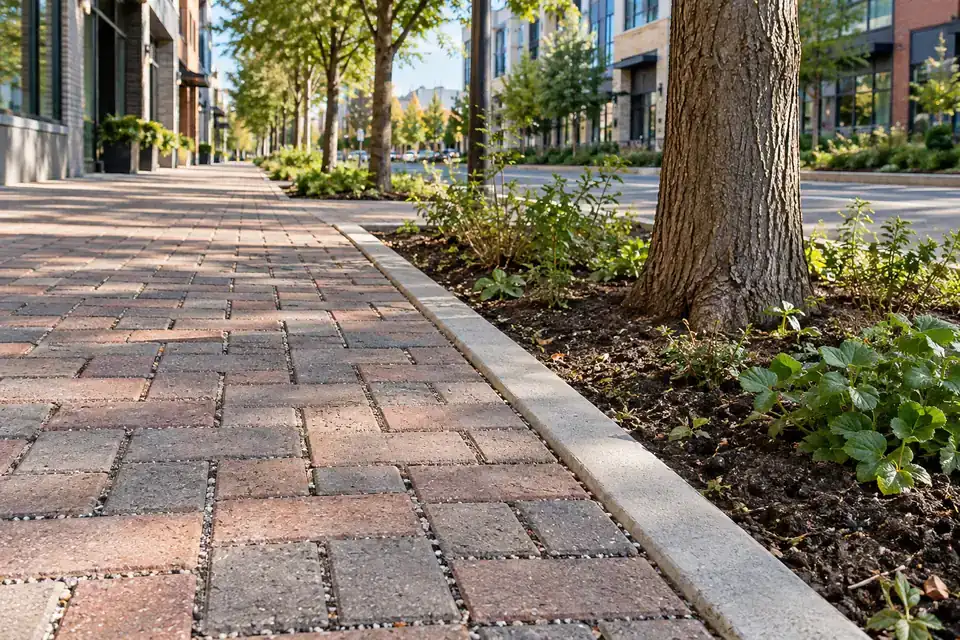
Permeable paving and adjacent tree beds can form part of the same landscape drainage design. Monitor root-zone soil beside the paving, or a project-validated underlying soil point, to observe local wetting and drying after rainfall. Keep the sensing elements in soil with verified contact, not in open gravel voids. Combine the record with surface infiltration checks and landscape inspections when reviewing plant care and the soil response around the paved area.
- Measurements to observe
- Rainfall response in adjacent planted root zones or verified underlying soil, and the subsequent moisture trend alongside surface infiltration and landscape inspection records.
- Monitoring point
- Use a defined tree-bed soil point beside the paving, or accessible underlying soil validated for the probe. Record the surrounding drainage layers and soil composition.
- Placement & installation
- Follow the site's approved pavement and landscape details. Install in verified soil contact, preserve drainage layers, and use protected cable routes accessible for later inspection.
- Project details
- Send paving and tree-bed sections, underlying soil details, intended sensing depth, access arrangements and inspection objectives, together with material-validation requirements, reporting interval and point quantity.
Green roof growing-medium care
Moisture trends in verified roof growing media, including rainfall and irrigation response and drying differences between exposed and sheltered planted areas.

Green roofs use engineered growing media whose depth, composition and exposure affect the planting environment. A probe configuration validated for the selected medium can track moisture in representative planted areas through rainfall, irrigation and drying periods. Compare exposed and sheltered zones when planning plant establishment or seasonal care. Coordinate monitoring with the roof designer's drainage and waterproofing details, and establish a medium-specific baseline so readings support the agreed horticultural maintenance objective.
- Measurements to observe
- Moisture trends in verified roof growing media, including rainfall and irrigation response and drying differences between exposed and sheltered planted areas.
- Monitoring point
- Choose representative planted roof zones with sufficient verified medium depth. Record medium composition, irrigation coverage and exposure, and agree placement with the roof specialist.
- Placement & installation
- Use roof-approved mounting and cable routes, with probe contact in the growing medium. Preserve waterproofing, drainage layers and specialist access during installation and maintenance.
- Project details
- Provide roof system details, growing-medium depth and composition, planting groups, irrigation coverage and exposure zones, plus approved mounting arrangements, medium-validation needs and reporting requirements.
07Restoration & habitat planting5 monitoring tasks +
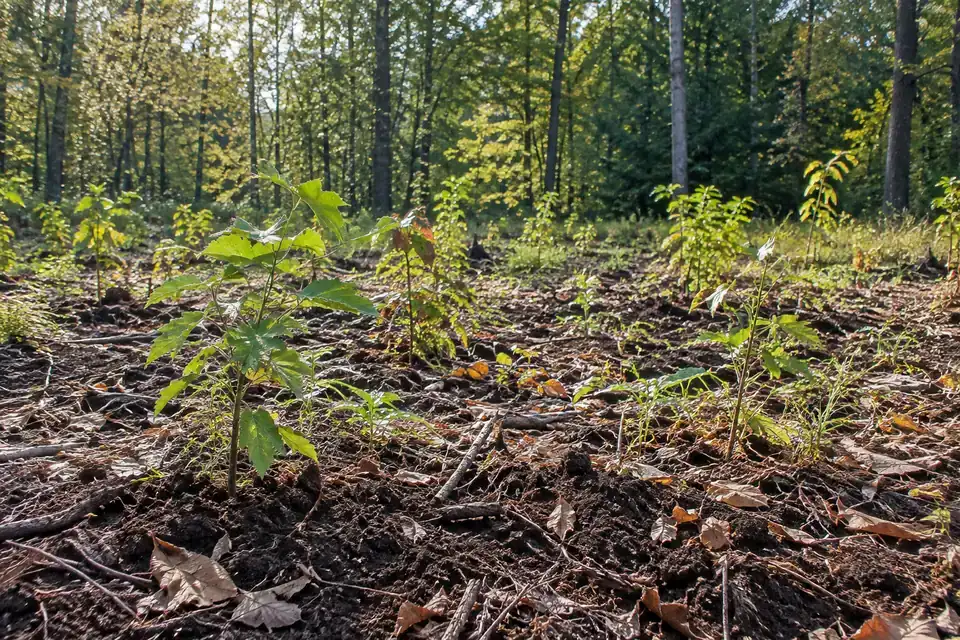
Support vegetation establishment through defined soil observation points. Interpret trends with soil sampling, weather and field assessments matched to the restoration objective.
Forest restoration planting plots
Local moisture patterns during seedling establishment, with comparisons across selected shaded and exposed plots and alongside rainfall, planting dates and field observations.
Restoration planting sites may include shaded ground, exposed openings and soils changed by earlier disturbance. Selected root-zone monitoring points provide a record of local moisture through the seedling establishment period. Compare these trends with planting date, species, rainfall and field survival observations when reviewing restoration care. Organize points by treatment or exposure rather than assuming one reading represents the whole site, and retain the installation details for comparisons across seasons.
- Measurements to observe
- Local moisture patterns during seedling establishment, with comparisons across selected shaded and exposed plots and alongside rainfall, planting dates and field observations.
- Monitoring point
- Choose representative soil near planted seedling root zones within the selected treatment plots. Record exposure, soil depth and competing vegetation for each monitoring position.
- Placement & installation
- Minimize disturbance to restoration plots and use approved terminal supports. Protect cables from wildlife and field operations, and document consistent probe placement for later comparisons.
- Project details
- Share restoration objectives, species groups, plot layout, soil conditions, exposure treatments and observation period, together with site access, communications coverage and the required measurement channels.
Riparian planting establishment
Moisture variation in selected riparian planting soils across higher and lower positions, with context from rainfall, seasonal conditions and vegetation establishment observations.
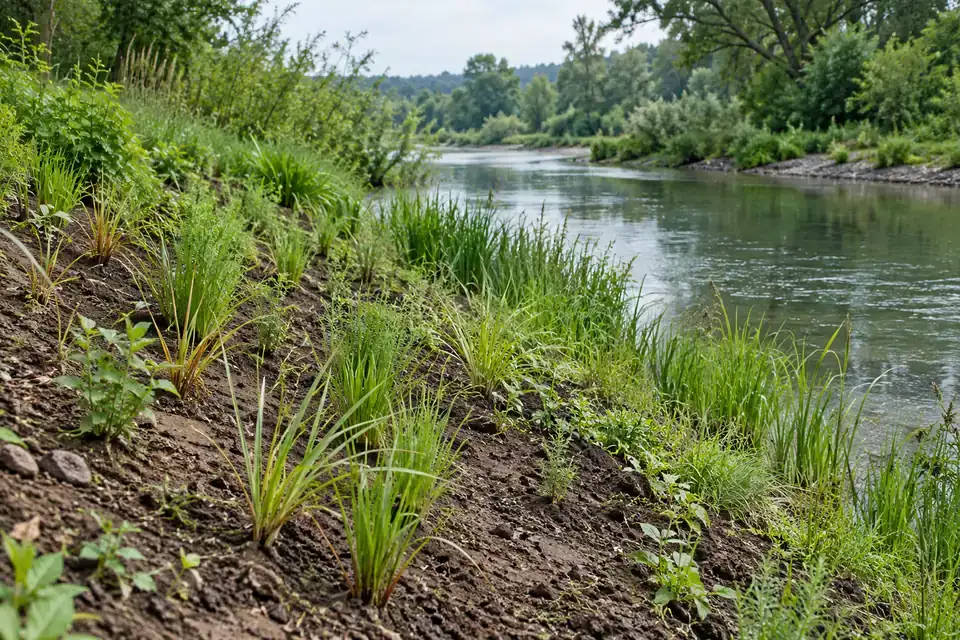
New planting beside rivers and streams can span higher ground and lower, periodically wetter soil. Monitor defined root-zone positions to compare their seasonal moisture pattern during establishment. Combine the record with rainfall, separate water-level observations where available, and field inspections of planted vegetation. The monitoring plan should identify the soil depth and bank position at each point, allowing the restoration team to review local planting care in the context of the wider site.
- Measurements to observe
- Moisture variation in selected riparian planting soils across higher and lower positions, with context from rainfall, seasonal conditions and vegetation establishment observations.
- Monitoring point
- Select representative planted soil at documented bank elevations and root-zone depths. Agree locations with the restoration team and keep each point tied to a planting zone.
- Placement & installation
- Use approved access and mounting arrangements suited to the expected site exposure. Preserve planting and bank works, protect cable routes, and plan access for inspection.
- Project details
- Provide the planting-zone plan, bank sections, species, expected wetting exposure and establishment objectives, plus monitoring duration, accessible mounting positions and the site's wireless coverage.
Reclaimed topsoil revegetation
Moisture response in replaced planting soils during establishment, with selected pH or EC trends compared against the material specification and soil-sampling programme.
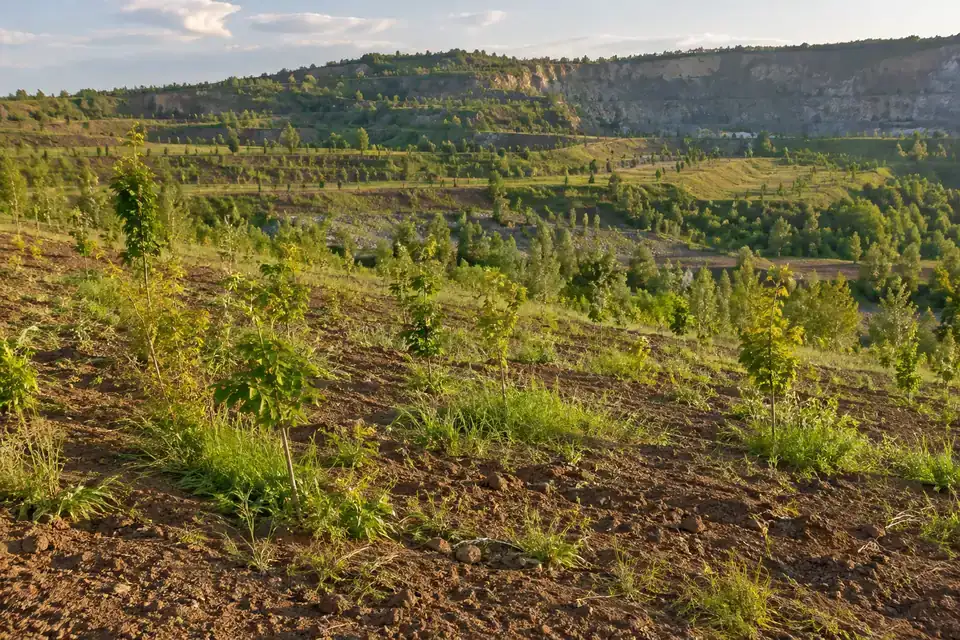
Revegetated sites often use replaced topsoil or amended growing material whose condition differs across the project. Establish representative soil monitoring points to document moisture during planting and subsequent maintenance. Where selected, pH or EC channels can add trend context alongside soil samples and the material specification. Link each record to the source material, placement depth and treatment so that the team can compare planted areas and review establishment care against a documented baseline.
- Measurements to observe
- Moisture response in replaced planting soils during establishment, with selected pH or EC trends compared against the material specification and soil-sampling programme.
- Monitoring point
- Locate probes within representative placed topsoil at recorded depths. Identify the source batch, amendment treatment and planted area associated with every selected measurement position.
- Placement & installation
- Verify probe suitability and contact in the placed material. Install after the relevant earthworks, protect cables from subsequent planting machinery, and retain access for checks.
- Project details
- Share topsoil sources, material test results, placement depths, amendments, revegetation treatments and monitoring objectives, together with requested channels, verification methods and the planned maintenance period.
Coastal landscape root zones
Moisture patterns in exposed and sheltered coastal planting soils, with EC trends included only after the required method and measurement range are confirmed.
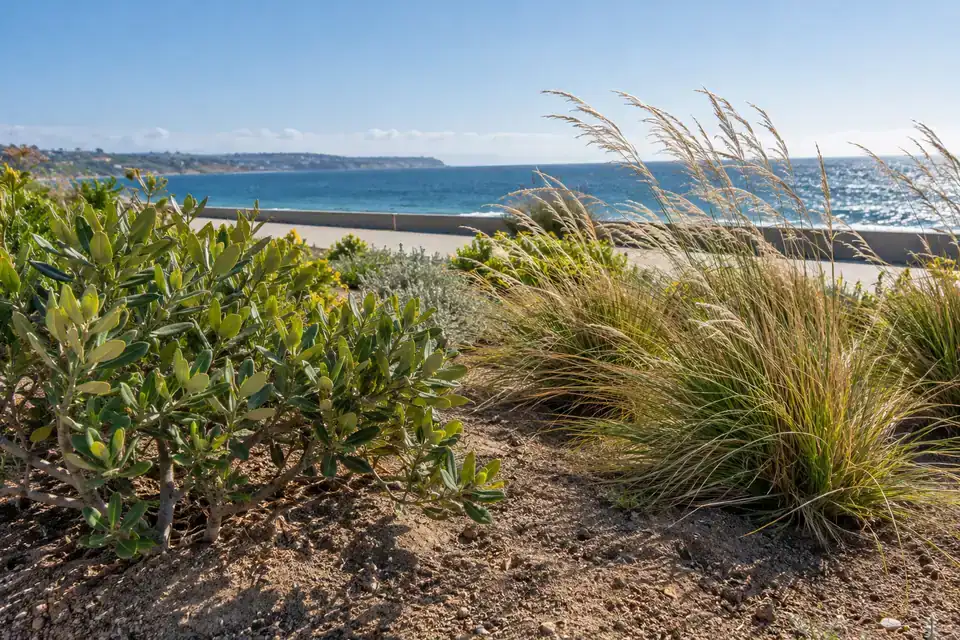
Coastal planting projects can combine exposed sandy soils, sheltered beds and irrigation water with different characteristics. Start with defined moisture-monitoring points and the site's soil assessment to review watering and establishment care. If EC monitoring is required, confirm the measurement method and expected range before selecting the configuration; the published standard range is 0–1,000 µS/cm. Pair readings with appropriate soil testing and planting observations when developing the site's maintenance approach.
- Measurements to observe
- Moisture patterns in exposed and sheltered coastal planting soils, with EC trends included only after the required method and measurement range are confirmed.
- Monitoring point
- Choose representative root-zone soil within the selected coastal planting beds. Record soil texture, irrigation source and exposure, and retain reference samples for project verification.
- Placement & installation
- Confirm the probe, enclosure and cable arrangement for the site's soil and exposure conditions. Maintain verified soil contact and use protected, accessible terminal mounting.
- Project details
- Provide soil and irrigation-water test results, expected EC range, plant groups, exposure conditions and required channels, plus the installation layout, monitoring duration and coverage information.
Habitat meadow establishment
Soil moisture through sowing and establishment, with comparisons across selected meadow areas, rainfall periods and the timing of vegetation observations.
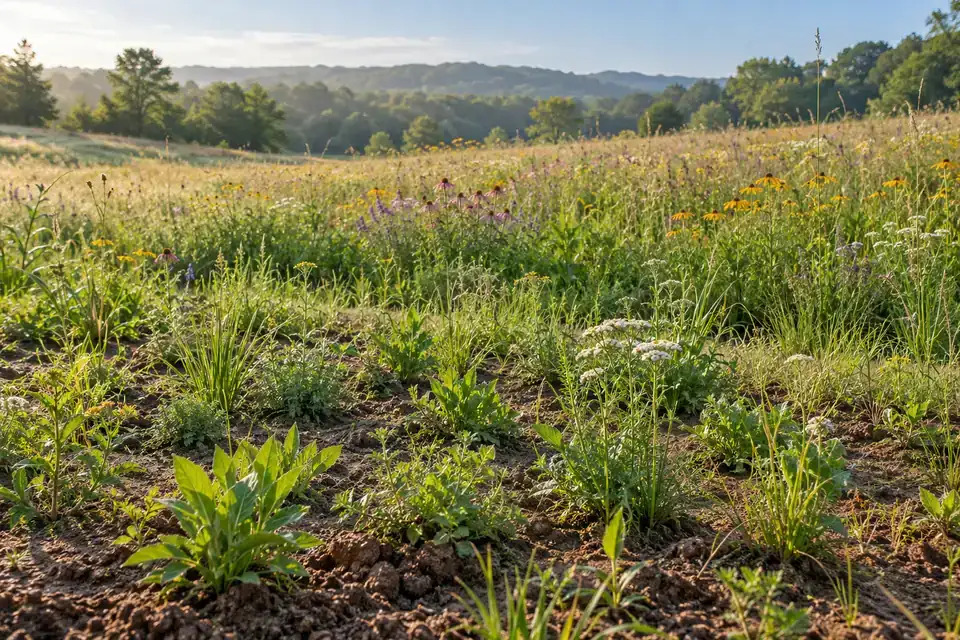
Native meadow and pollinator planting projects benefit from understanding soil conditions during sowing and early establishment. Record moisture at selected seedbed and developing root-zone positions, then compare the trends with rainfall, sowing dates and vegetation surveys. Different species and site areas may follow different establishment patterns, so organize monitoring around the planting plan. The data provides environmental context for field observations and helps teams document the conditions associated with each treatment or planting period.
- Measurements to observe
- Soil moisture through sowing and establishment, with comparisons across selected meadow areas, rainfall periods and the timing of vegetation observations.
- Monitoring point
- Select representative soil within the planted meadow treatments. Record seedbed or root-zone depth, species mix and local soil characteristics for each selected monitoring point.
- Placement & installation
- Agree probe positions with the planting and survey team. Keep cables clear of planned mowing paths, protect plot markers, and preserve consistent soil contact.
- Project details
- Share species mixes, sowing dates, meadow treatments, soil profiles and survey schedule, together with intended observation depths, site access, communications coverage and required monitoring duration.
08Research, trials & project handover5 monitoring tasks +
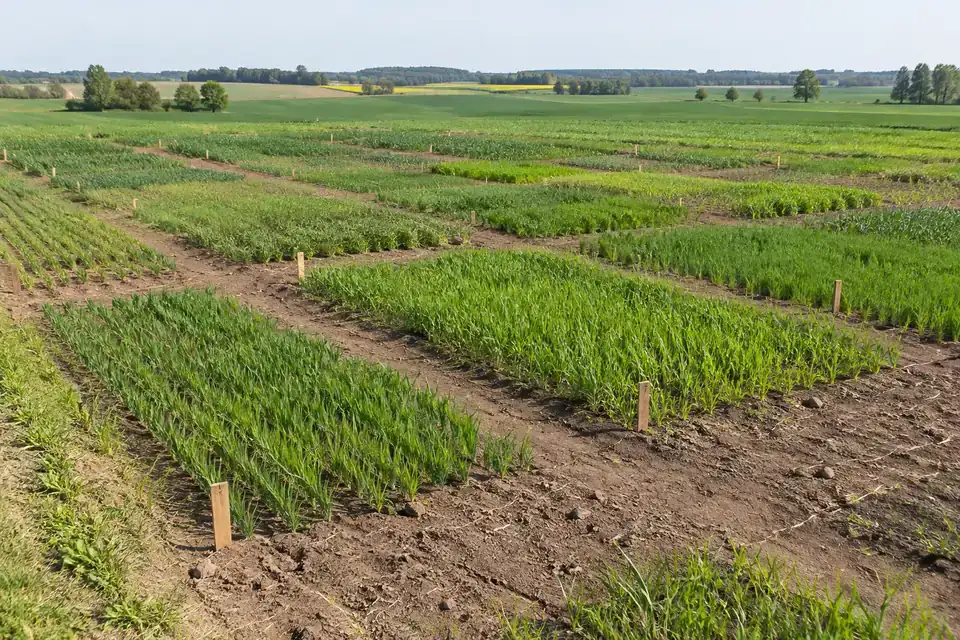
Build traceable soil records for comparison and maintenance handover. Agree the method, sampling references, installation metadata and analysis plan before collecting the series.
Agronomic field trial records
Defined soil-channel time series associated with plot treatments, irrigation events and crop observations, using documented configuration, sampling intervals and reference checks.
Field trials need environmental records that can be traced to individual plots, treatments and observation dates. Soil monitoring adds a time series at defined measurement points alongside crop assessments, irrigation logs and reference soil samples. Select channels and sampling intervals around the trial question, and document the installation and verification method before collecting comparison data. Keep plot identities and timestamps consistent so that researchers can relate local soil trends to the experiment's recorded management and outcomes.
- Measurements to observe
- Defined soil-channel time series associated with plot treatments, irrigation events and crop observations, using documented configuration, sampling intervals and reference checks.
- Monitoring point
- Place sensors at preselected positions and depths within the experimental plots. Record treatment, plot identity, soil profile and the reference-sampling location for each point.
- Placement & installation
- Apply a consistent installation protocol across comparable plots. Preserve experimental layout, document soil contact and configuration, and verify readings against the agreed reference method.
- Project details
- Provide the trial question, treatment and replication layout, soil profiles, selected channels, sampling schedule and reference methods, plus data-export requirements and the expected observation period.
Soil texture comparison studies
Wetting and drying patterns across verified soil textures, interpreted with documented calibration, sensing depth, reference samples and the applied rainfall or irrigation conditions.
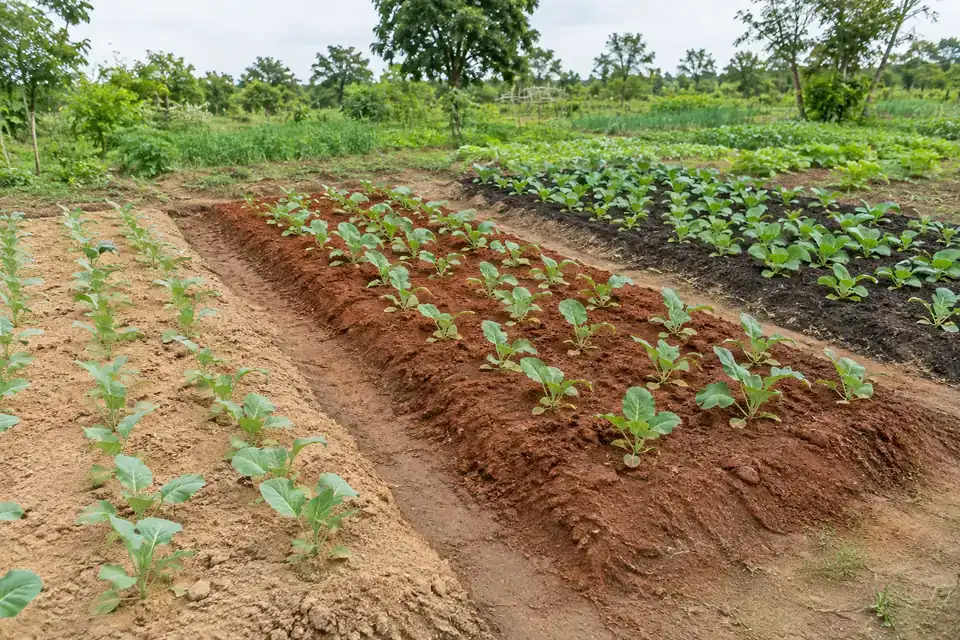
Sandy, loamy and clay-rich soils can show different wetting and drying patterns under similar management. Build a comparison around documented soil profiles and a probe configuration verified for each selected material. Record rainfall or irrigation events and collect reference samples according to the study plan. Comparing the resulting time series helps describe local soil response, provided that depth, installation and calibration differences are accounted for rather than treating equal percentage readings as identical plant-water conditions.
- Measurements to observe
- Wetting and drying patterns across verified soil textures, interpreted with documented calibration, sensing depth, reference samples and the applied rainfall or irrigation conditions.
- Monitoring point
- Select clearly characterized soil profiles or prepared plots representing the materials under study. Use comparable depths and record texture, bulk condition and reference-sampling positions.
- Placement & installation
- Follow a consistent placement procedure and validate each soil response. Maintain soil contact without unintended compaction, and document any material-specific calibration or configuration adjustments.
- Project details
- Share soil texture and characterization results, comparison objectives, proposed depths, irrigation or rainfall records and reference-testing methods, plus the required channels, data format and duration.
Multi-depth root-zone observations
Moisture timing and drying trends at separately identified upper and lower soil positions, with each series linked to its verified sensing depth.
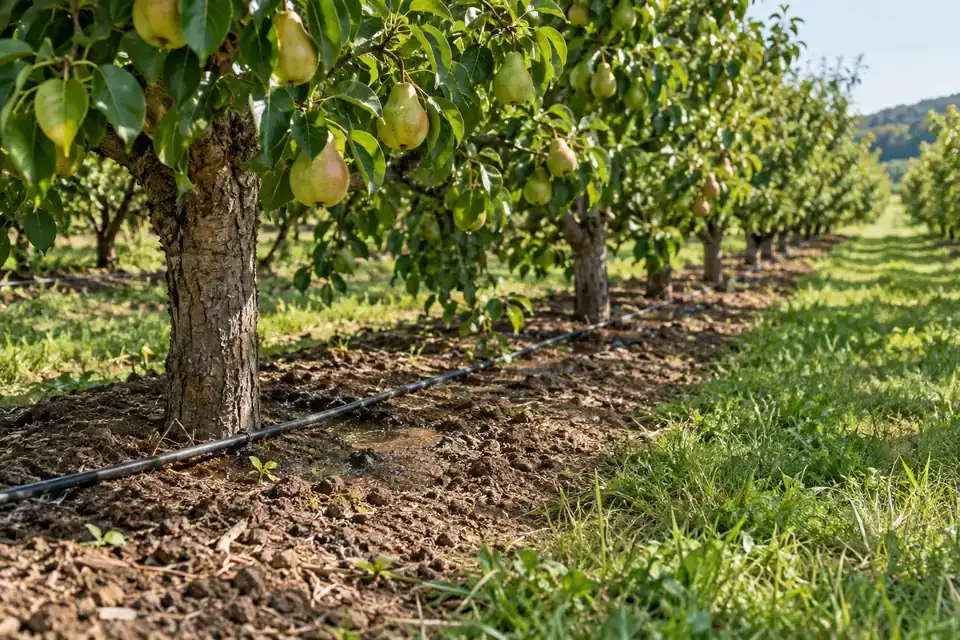
Different depths within a root zone may respond at different times to irrigation and rainfall. Install separate, identified monitoring points at selected depths to compare these local patterns over time. The plan should reflect the crop or planting roots, soil layers and the management question. Relate the readings to irrigation records and reference observations, and retain the depth information with every data series so that upper and lower soil responses can be reviewed consistently.
- Measurements to observe
- Moisture timing and drying trends at separately identified upper and lower soil positions, with each series linked to its verified sensing depth.
- Monitoring point
- Choose distinct depths appropriate to the intended root zone and soil profile. Record every probe's sensing position and keep the measurement-point identities separate.
- Placement & installation
- Use separate verified sensing points for each selected depth, with an agreed probe and cable arrangement. Minimize disturbance and retain documented soil contact and placement.
- Project details
- Provide root-zone and soil-layer information, desired monitoring depths, irrigation method and comparison objective, plus probe-access requirements, reference checks and the expected number of measurement points.
Irrigation zone response comparisons
Soil moisture response to recorded irrigation events across selected zones, with comparison of wetting timing, subsequent drying and local management conditions.
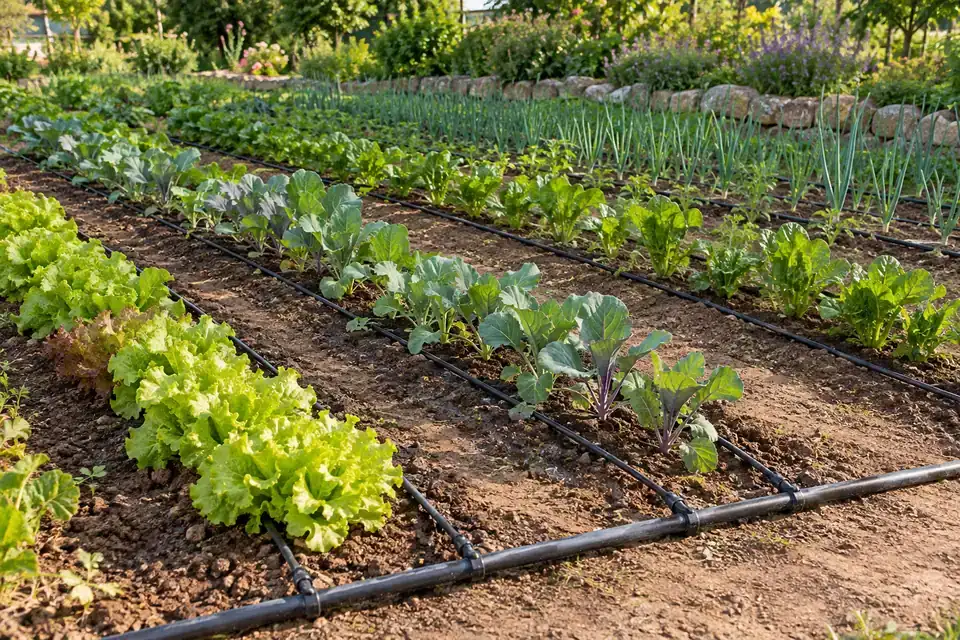
Comparing irrigation zones is most useful when each soil record has a clear relationship to planting, outlet position and watering schedule. Establish representative points within selected zones and observe their response to actual irrigation events. Review the time series alongside system checks and soil conditions to identify areas needing closer inspection or a watering-plan review. Keep depth and placement consistent where direct comparison is intended, while documenting the differences between the zones.
- Measurements to observe
- Soil moisture response to recorded irrigation events across selected zones, with comparison of wetting timing, subsequent drying and local management conditions.
- Monitoring point
- Choose representative positions within each selected irrigation zone. Record planting, soil, sensing depth and distance from emitters or sprinklers so the comparisons have context.
- Placement & installation
- Use a consistent installation method for comparable points and protect cables during irrigation maintenance. Verify the initial response while recording the actual watering event.
- Project details
- Share irrigation-zone maps, outlet locations, operating schedules, plant groups and soil profiles, together with comparison objectives, reference checks, requested reporting interval and the required point count.
Municipal planting handover records
Moisture response in new municipal planting beds through irrigation commissioning, watering visits and the establishment period, with selected channels matched to handover objectives.
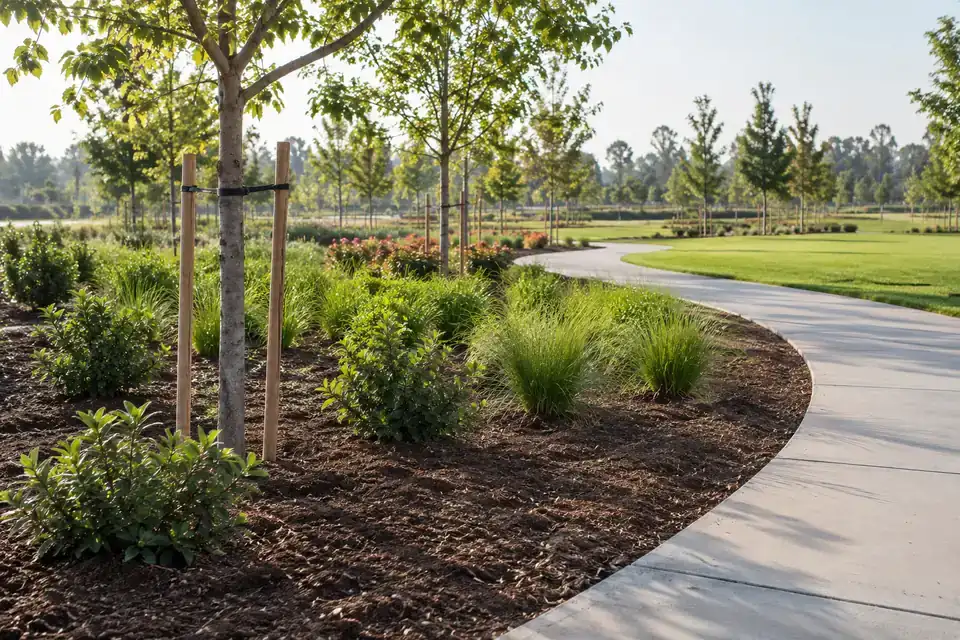
A new park, streetscape or public planting bed can pass from construction delivery to a separate maintenance team. Establish defined soil monitoring points to carry a useful environmental record through that transition. Link the readings to planting-soil specifications, irrigation commissioning, watering visits and plant inspections during the agreed establishment period. A shared point register and clear reporting ownership help both teams discuss local soil care using the same locations and documented baseline.
- Measurements to observe
- Moisture response in new municipal planting beds through irrigation commissioning, watering visits and the establishment period, with selected channels matched to handover objectives.
- Monitoring point
- Select representative planting-soil points across the handed-over maintenance zones. Record soil source, depth, planting date, irrigation circuit and the responsible team for each point.
- Placement & installation
- Coordinate probe and terminal installation with landscape completion works. Protect equipment from finishing operations, document final positions, and provide accessible routes for maintenance checks.
- Project details
- Provide handover zones, planting-soil specifications, irrigation commissioning records, establishment period and reporting responsibilities, together with requested channels, maintenance access, platform users and approximate quantities.
SERIES & CONFIGURATIONS
One series.
The soil configuration your project needs.
H200, H300 and H500 are the published soil sensor family. Select the soil channels, probe and cable arrangement, product form, connectivity and reporting profile together. A clear channel list identifies what each ordered unit measures.
H200
Channel and deployment configuration selected for your project
Discuss this configuration ↗H300
Channel and deployment configuration selected for your project
Discuss this configuration ↗H500
Channel and deployment configuration selected for your project
Discuss this configuration ↗| Published models | H200 / H300 / H500 |
|---|---|
| Soil moisture range | 0–100%; sensing medium and reported percentage basis to be confirmed for the selected configuration; for non-frozen soil, not specified for permafrost layers |
| Published moisture accuracy | ±3%; confirm the reference basis, soil conditions and verification method |
| Conductivity (EC) range | 0–1,000 µS/cm (0–1 mS/cm); specify the required range for the actual soil or growing medium |
| Published EC accuracy | ±3%; confirm the measurement and accuracy basis for the selected configuration |
| pH range | 0–14 pH |
| pH resolution | 0.01 pH, as stated on the product page; resolution is distinct from measurement accuracy |
| NPK range | 0–1,999 mg/kg; confirm the selected nutrient channels and measurement method |
| Published NPK accuracy | ±2% FS; verify the required channel response and site-reference method |
| Soil temperature | Where confirmed in the selected configuration; range and accuracy specified with the order |
| Wireless options | 4G Cat.1 / NB-IoT / LoRa, by supplied configuration; confirm regional coverage and the integration path |
| Data protocol & platform | MQTT listed; Hitelecom Cloud or agreed private-platform integration |
| Protection | IP68 enclosure listed; agree the probe, terminal and cable deployment details |
| Battery-life reference | More than 10 years at four-hour reporting under specified test conditions; actual runtime depends on configuration and operating profile |
Bring the specification back to your project.
Define the soil objective
Crop or planting use · Soil or growing medium · Required channels and ranges · Reference test method
Define the sensing point
Root-zone depths · Representative locations · Probe and cable arrangement · Terminal mounting · Maintenance access
Define the data path
4G, NB-IoT or LoRa variant · Sampling and reporting · Receiving platform · Alert and review workflow
CONNECTIVITY & INTEGRATION
Hitelecom Cloud.
Your soil data, connected.
The published family supports Hitelecom Cloud and private-platform integration, with MQTT listed for data delivery. Agree the message format, authentication and receiving endpoint with the supplied configuration. For LoRa projects, confirm the radio protocol, gateway and server path so commissioning can verify the complete data route.
For distributed locations
Select the modem and regional bands around operator availability and coverage at the transmitter position. Agree the reporting profile, power arrangement and notification workflow.
- Installation country and operator
- Signal at the actual mounting position
- Sampling, reporting and required alert response
For points across one site
Match the supplied radio protocol, regional settings and receiver or gateway. Specify any LoRaWAN requirement with the model and complete onward connection.
- Device protocol and gateway compatibility
- Site layout and radio coverage
- Gateway power and onward data connection
Make the first reading useful.
Agree device identity, monitoring-point reference, channel names, measurement units and timestamps in a sample message. Check the endpoint and supported authentication, then test the complete path to the intended platform and recipients.
Discuss platform integration ↗ANSWERS FOR YOUR PROJECT
Frequently asked questions.
Practical answers for selecting soil channels, planning representative monitoring points and connecting the readings to planting and maintenance decisions.
Ask about your project ↗Which soil parameters can I include in an H Series configuration?
Start with the channels your project needs. The published soil family lists soil moisture, EC, pH and NPK measurement, with parameter combinations and probe options available for customization. Soil temperature is included where confirmed in the selected configuration. Ask for a channel list that identifies what each ordered unit measures, together with its range, measurement basis, probe arrangement and verification method for the intended soil or growing medium.
How does soil moisture monitoring support irrigation scheduling?
A defined soil point shows how moisture changes after irrigation or rainfall and during the interval before the next event. Review that trend alongside soil texture, the effective root zone, crop or planting stage and recent weather. Establish the site's normal wetting and drying behaviour before setting an irrigation trigger. Combining the readings with watering records and field observations helps the team review timing and follow up areas that need attention.
Where and how deep should a soil probe be installed?
Choose positions that represent the soil, planting and irrigation zone you want to observe. The depth should relate to the effective root area and the question being asked; separate identified points can compare upper and lower soil conditions where useful. Install the selected probe with consistent contact in the verified medium, and document its position. Include protected cable routes, maintenance access and the communication terminal's mounting in the deployment plan.
How many monitoring points does my site need?
Plan the point count around meaningful differences in soil, crops or planting, irrigation zones, exposure and root depth. Begin with representative locations for the management questions your team needs to answer, then use an initial deployment to review whether more points would improve the picture. Keep a register of each point's soil and installation details. This makes comparisons useful and gives the quotation a clearer basis than a fixed number per area.
Can I use the same configuration in mineral soil and growing media?
Select the configuration for the material it will measure. Mineral soil, peat, coco coir and other growing media can differ in structure, water retention and electrical response. Share the medium specification and expected conditions so probe suitability, measurement basis and site verification can be agreed. Establish a baseline in the actual material, with consistent probe contact and reference checks, before comparing readings across different beds, containers or substrate types.
How should I set a soil moisture alert?
Build the threshold around your site's soil and planting needs. Record the moisture response through representative watering, rainfall and drying periods, and relate it to root-zone observations and the agreed irrigation strategy. Use that baseline to choose a practical notification level, then define who reviews the alert and what field check follows. Review settings as crops, seasons or soil management change, and verify the complete notification path during commissioning.
What do soil EC and pH readings help me understand?
EC adds information about the medium's electrical conductivity, while pH describes its acidity or alkalinity. Review these trends together with moisture conditions, the selected measurement method and appropriate soil tests. Specify the EC range your site requires: the published standard channel is 0–1,000 µS/cm. Record the method used when comparing sensor and laboratory results, so the team interprets changes on a consistent basis for the intended planting or management objective.
How should NPK readings fit into a nutrient-management programme?
Use the selected NPK channels within a documented soil-management plan. Agree which nutrient measurements are reported, their method and the reference tests used to check them in the actual soil. Compare trends with samples from representative locations, crop needs and the site's previous nutrient applications. Regional soil-test recommendations and the agronomist's plan provide the basis for fertilizer decisions, while the monitoring record adds context between field visits and scheduled sampling.
Can the sensor support parks, street trees and roadside planting?
Yes, defined points in planted soil can support the maintenance team's view of root-zone moisture between visits. Select representative tree pits, lawn areas, shrub beds or planted medians, and connect the trends with watering routes, rainfall and plant inspections. For new trees, the root ball and surrounding soil may warrant separate observations. Specify installation depth, equipment protection and maintenance access so the record remains useful through establishment care and routine landscape work.
For ancient and veteran trees, a qualified tree-care specialist should select monitoring positions and approve installation within the root protection plan.
Can soil monitoring support rain gardens and permeable-pavement sites?
Plan readings in verified soil or planting medium at clearly defined locations. For rain gardens and bioretention beds, compare wetting and drying trends with rainfall, visible ponding and maintenance inspections. Beside permeable paving, choose planted root-zone soil or a project-validated underlying soil point with consistent probe contact, rather than open gravel voids. Agree the medium and installation details before deployment, and use separate inspections or tests for the surface infiltration objective.
Which wireless option and platform should I specify?
Choose the connection around coverage at the terminal position, the reporting requirements and the receiving platform. The published family lists 4G Cat.1, NB-IoT and LoRa variants, with Hitelecom Cloud and private-platform integration. Confirm regional modem support and the agreed message format. For LoRa, include the gateway, radio protocol and server path in the quotation. Check the full data route and terminal mounting before completing the field installation.
What information helps Hitelecom configure and quote my project?
Share the application, soil or growing-medium specification, crop or planting type and the root-zone positions you want to observe. Add the required channels and ranges, point quantity, probe and cable arrangement, terminal mounting and available wireless coverage. Include sampling and reporting requirements, the receiving platform and any reference-testing needs. A planting plan, soil-test report or site section helps the team define a suitable configuration and prepare a quotation around your actual project.
LET'S TALK ABOUT YOUR PROJECT
Tell us about the soil.
Build the right monitoring plan.
Share the planting, soil or growing medium and the measurements you need. Hitelecom can review the channel combination, probe arrangement, wireless deployment and quotation for your project.
sales@hitelecom.cn ↗Your soil. Your project requirements.
A planting plan, soil-test report or site section helps define the monitoring points. Include intended depths, irrigation zones, medium specifications and platform requirements where available.