


Acquisition and data validity
Implement sensor drivers, settling time, sampling schedules, units and timestamps. Distinguish a valid reading from warm-up, missing data, out-of-range input or a sensor fault.


Translate a monitoring requirement into firmware that can be integrated, tested and maintained on the selected hardware. Hitelecom scopes acquisition, device states, communications and diagnostic behaviour around the measurement and deployment. Define what happens when a sensor is unavailable, a connection is interrupted or power returns. Local configuration, remote updates and security functions are designed into the project where required; their implementation depends on the board, memory and receiving system.
Engineering focus
An embedded project needs more than a working payload. Specify the timing, state transitions, retained data and recovery behaviour that make the device useful in the field.
Implement sensor drivers, settling time, sampling schedules, units and timestamps. Distinguish a valid reading from warm-up, missing data, out-of-range input or a sensor fault.
Separate measurement, event evaluation and periodic reporting. Define hysteresis, persistence, event priority and repeat notifications around the operating workflow.
Coordinate MCU sleep, peripheral supplies and modem activity. Measure current by operating state and evaluate the duty cycle on the actual board.
Specify network attachment, session management, bounded retries and reconnection. Agree payload versions, units, device identity and the compatible receiving path.
Where memory permits, design record queues, sequence numbers and restart behaviour. Make buffer capacity, overwrite rules and handling of late data explicit.
Define installation settings, validation rules, authorised access and restore behaviour through the selected local or remote interface. NFC or Bluetooth requires compatible hardware.
Where included, specify image authenticity, version compatibility, update storage and interruption handling. Bootloader, rollback and credential protection require a reviewed hardware/software design.
Expose useful reset causes and fault states, and produce a controlled build with test results. Agree source access, dependency records, loading instructions and maintenance responsibilities.
Project planning
A firmware brief should connect each requirement to a hardware interface and a verification method.
Confirm schematics, components, memory, interfaces and available prototypes. Identify dependencies on third-party code or module firmware.
Describe acquisition, reporting, power modes, configuration and fault recovery with measurable acceptance conditions.
Agree test fixtures, firmware loading, version control, source rights and post-release support.
Applications
Explore device-specific development briefs rather than a universal firmware package. The examples connect a practical monitoring task to required inputs, proposed software outputs and an acceptance check. Supported sensors, radios and interfaces are selected for each project.
12 application areas / 36 project tasks
Illustrative environments, not evidence of customer installations. Project suitability is assessed against the agreed requirements.

Preserve the meaning and sequence of temperature records during changing measurement and connection conditions.
Keep acquisition timing independent of when a network upload succeeds.
Turn a configured temperature limit into a traceable device event.
Retain the agreed record history while the receiving path is unavailable.

Define reference settings and event behaviour for racks, poles and other monitored structures.
Keep the installation reference separate from subsequent measured movement.
Distinguish brief disturbances from the movement condition the project needs to report.
Report a selected movement event without losing scheduled status information.

Structure vibration acquisition around the selected sensor, machine duty and processing requirements.
Capture repeatable data blocks for the agreed operating condition.
Implement selected time- or frequency-domain calculations where specified.
Combine routine summaries with selected detailed recordings.

Make sensing status visible alongside concentration values and environmental channels.
Avoid presenting start-up or unavailable measurements as valid concentrations.
Coordinate gas, temperature, humidity and particle channels with different response behaviour.
Implement authorised coefficient and service-state handling where included.

Represent measurements and site events without hiding interface or process failures.
Convert selected pressure, level and auxiliary inputs into consistent records.
Scope damping and persistence around changing water-level conditions.
Maintain the agreed counter and rollover behaviour for compatible pulse sources.

Balance position acquisition, movement events and reporting against the intended operating profile.
Switch between stationary and moving profiles using the selected motion source.
Limit acquisition attempts and describe unavailable-position results explicitly.
Keep device time, events and position records coherent during coverage gaps.

Coordinate multiple outdoor sensors with supply constraints and maintainable measurement timing.
Schedule sensors with different power-up and settling needs.
Define behaviour when available energy changes.
Provide installation-time visibility of channels and the receiving path.
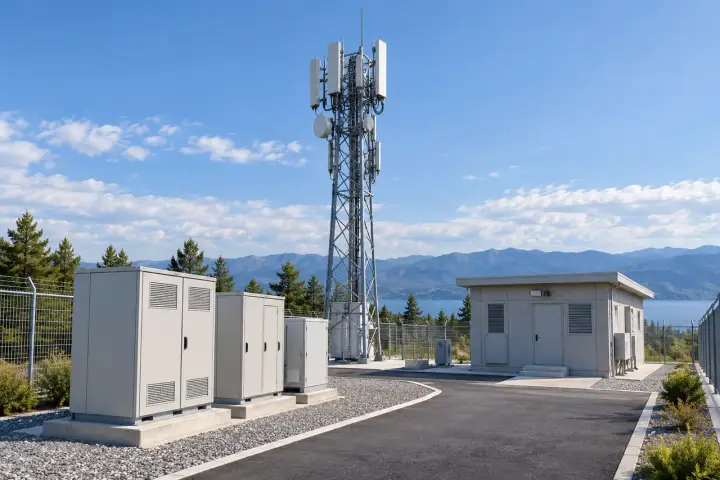
Translate specified field records while preserving identity, status and timing.
Map supported field registers or frames to a stable application schema.
Handle records from the specified radio devices and receiving configuration.
Separate field collection from onward connection availability.
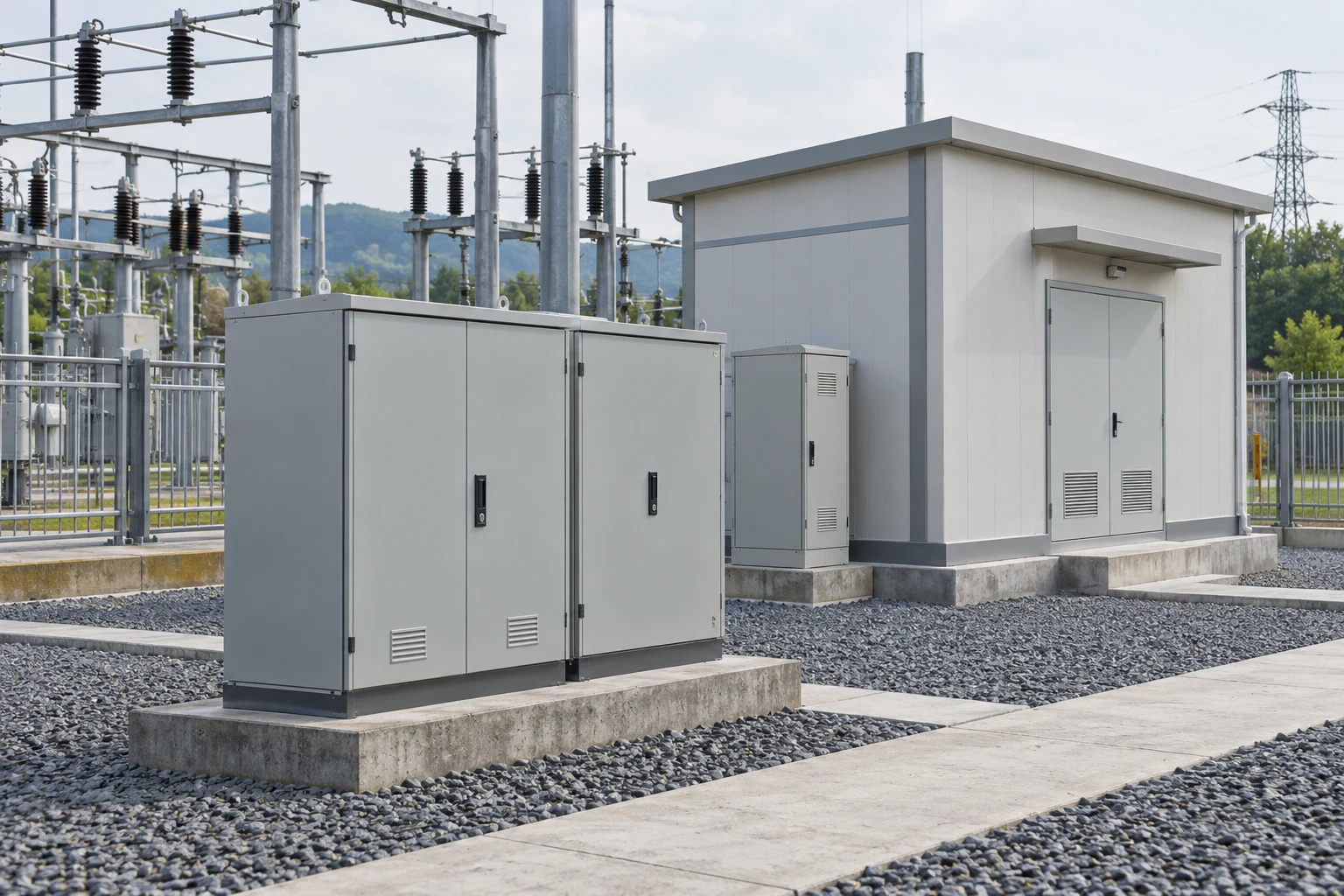
Give counters and discrete states clear electrical and temporal meaning.
Capture compatible meter pulses and preserve totaliser state.
Interpret door, dry-contact or equipment-state inputs consistently.
Combine input states and selected environmental channels in one record.

Coordinate environmental and occupancy-related inputs around an agreed operational use.
Schedule environmental, light and presence inputs without losing channel identity.
Apply site-specific settings through the supported commissioning interface.
Make offline, stale and abnormal states distinguishable at the receiver.
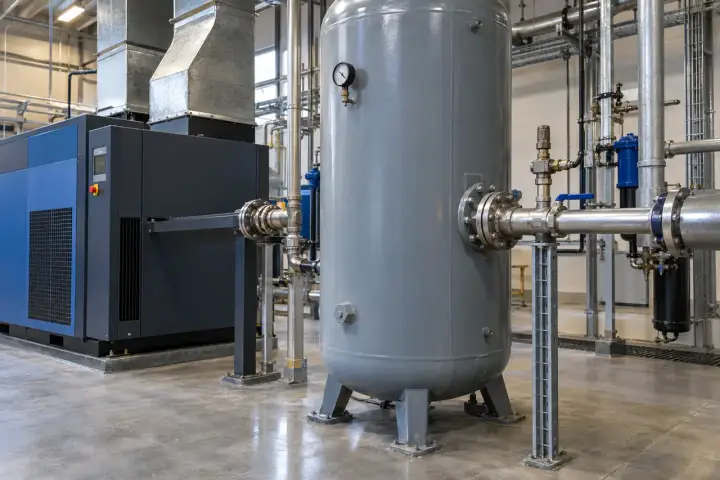
Integrate existing equipment data without silently assuming control authority.
Read the specified equipment interface and convert it into monitoring records.
Capture cycle events from supported signals for operational reporting.
Define explicit request, acknowledgement and timeout behaviour if remote commands are included.
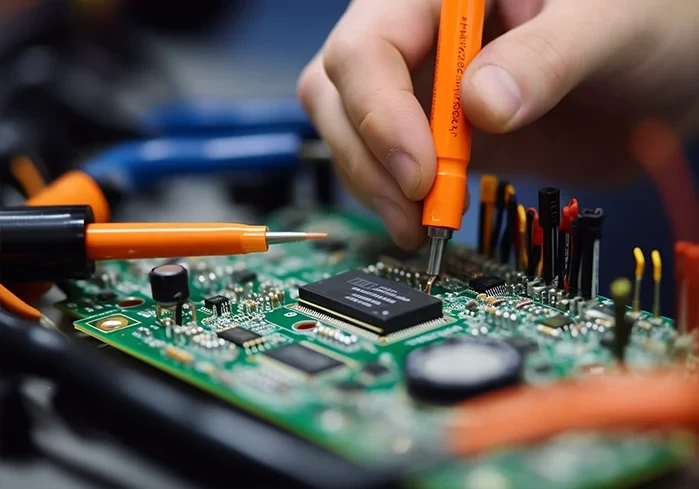
Keep customer-specific behaviour traceable to the correct hardware and release.
Adapt payloads and configuration for a named receiving platform.
Support agreed identity loading and production verification steps.
Implement the update and recovery design selected for the platform.
Scope & specifications
The firmware specification is project-specific; these items define the engineering deliverable.
| Service type | Custom embedded firmware and agreed integration work |
|---|---|
| Hardware baseline | Named board revision, components and supported interfaces |
| Software environment | Agreed MCU or processor, toolchain, RTOS or bare-metal approach |
| Functional scope | Acquisition, state logic, configuration and communication requirements |
| Power targets | Measured acceptance conditions for the specified hardware and duty cycle |
| Fault recovery | Defined timeouts, retry limits, watchdog interaction and diagnostic records |
| Security and updates | Requirements and verification scope expressly included in the contract |
| Testing | Representative hardware, test cases and required evidence |
| Deliverables | Firmware binaries, loading instructions and documentation as contracted |
| Source and support | Source delivery, third-party licences, maintenance and change terms agreed in writing |
Integration & handover
Agree the evidence and files needed for integration and maintenance.
Review interfaces and state behaviour against the available hardware and project priorities.
Develop on the agreed platform and test normal operation, relevant faults and recovery conditions.
Deliver the contracted firmware package, release information and documentation with explicit source and support terms.
FAQ
Resolve the technical scope, interfaces and acceptance conditions before committing to a deployment.
Yes, where the source, build environment, modification rights and suitable test hardware are available. The initial review identifies reusable drivers and application logic, hardware dependencies and missing verification evidence.
Provide the board revision, schematics, components, existing source if available, interface documents and expected state behaviour. Include timing, power, record-retention and recovery requirements with the proposed acceptance hardware.
Sampling creates measurements, event logic evaluates defined conditions, and reporting sends records through the receiving path. Each has its own timing and failure behaviour; an event does not imply a guaranteed end-to-end notification delay.
Local buffering can be scoped where storage and power permit. Specify capacity, sequence identifiers, overwrite policy, restart behaviour and how late or duplicate records are handled by the receiving system.
Selected calculations can be included with documented inputs, units and reference tests. Processing capacity, sensor bandwidth and data quality determine feasibility. Feature extraction is distinct from validated fault diagnosis or prediction.
Power-state and communication scheduling can be evaluated on the selected hardware. Runtime depends on the complete power system, sensing loads, network conditions and environment; it requires a defined energy budget and supporting measurements.
No. Select the protocol and compatible hardware for the project, then define the exact revision, message mapping and test endpoints. LoRa radio support alone does not establish LoRaWAN compatibility.
The update design should define image verification, version compatibility, storage layout and recovery after interruption. Dual-image storage or rollback needs sufficient memory and an implemented bootloader; its behaviour is tested on the supplied hardware.
Specify authentication, credential provisioning, authorised settings, image verification and diagnostic access as requirements. Security testing, vulnerability response and any external certification are separately agreed deliverables.
Source delivery, toolchain versions, build instructions, dependency records and modification rights are stated in the agreement. Third-party components remain subject to their licences; ownership is not inferred from a firmware binary.
Use a requirements-to-test matrix on named hardware revisions. Include normal operation, boundary inputs, communication outages, power interruptions, persistence and recovery, with recorded expected and actual results.
This is a development service. A firmware requirements specification, interface definition and acceptance plan define the work; a fixed product datasheet would not describe the customer-specific hardware and behaviour accurately.
Discuss your project
Share the board revision, components and required device behaviour. Include available firmware, interface documents and acceptance priorities for technical assessment.
sales@hitelecom.cn ↗